
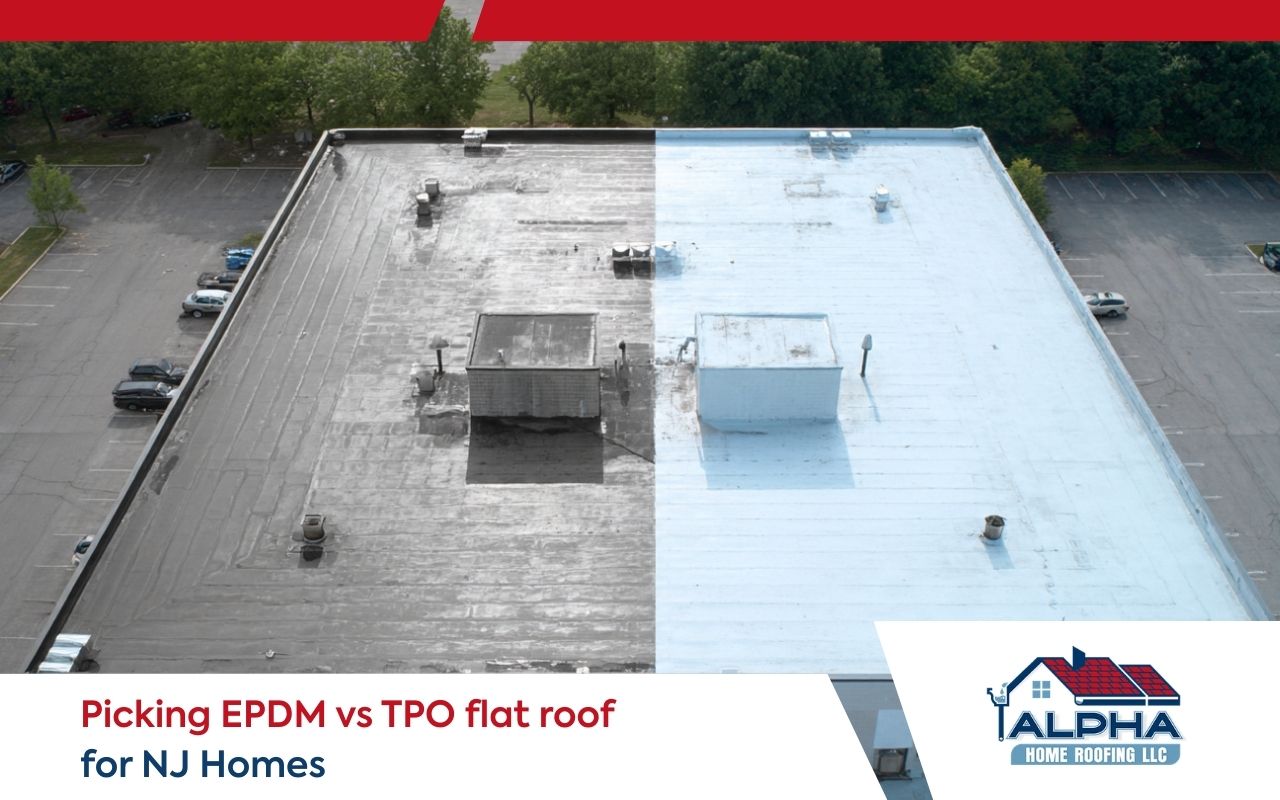
Choosing the right material for your flat roof might feel like cracking a code, especially with EPDM and TPO. However, each option affects lifespan, seam tightness, and overall comfort in New Jersey.
Because this roof is also an investment, it helps to compare how each handles NJ’s winters and summers. With EPDM vs TPO flat roof for NJ choices, you can balance quality, cost, and long-term value with more confidence.
What EPDM roofing is like for NJ homes
EPDM is a rubber roof sheet that has been used for decades. Also, its darker surface can warm up faster in winter, which may help with snow and ice.
Because EPDM often comes in large rolls, it can mean fewer seams. As a result, there are fewer spots where water could sneak in. EPDM vs TPO flat roof for NJ comparisons often highlight this simple seam setup.
EPDM lifespan and durability
EPDM is known for a long lifespan, often around 25 to 30 years with good install work. Moreover, it stays flexible, so it handles NJ’s freeze-and-thaw shifts without splitting.
EPDM seams and leak risk
Since there are fewer seams, upkeep is usually simpler. Also, quick visual checks can catch early wear before it turns into a leak.
What TPO roofing is like for NJ homes
TPO is a newer single-layer roof with a bright, reflective surface. Therefore, it can help keep rooms cooler during hot NJ summers.
Its seams are joined by heat welding, which can create strong connections. Still, results can vary by product quality and installer skill. EPDM vs TPO flat roof for NJ research should always include the brand and thickness you choose.
TPO lifespan and real-world results
High-quality TPO can last about 20 to 25 years when seams stay solid. However, because it has a shorter history than EPDM, long-term results can differ across makers.
TPO seams and inspection needs
Welded seams can be very strong, yet they need careful workmanship. So, after big storms, it’s smart to check for seam lift or early stress.
How New Jersey weather affects EPDM and TPO
New Jersey brings humid summers, sharp sun, and cold winters. Because EPDM is rubber-like and flexible, it often handles cold snaps well.
TPO reflects sun, so it can lower heat buildup during summer. Still, repeated strong sun and rough weather can test seam areas. With EPDM vs TPO flat roof for NJ planning, think about shade, wind, and roof exposure.
- Cold swings: EPDM stays bendy and less likely to split.
- Summer heat: TPO can reduce heat soak with its reflective surface.
- Storm stress: both depend on solid seam work and good drainage.
Installation basics that matter most
EPDM is usually laid in larger sheets and fixed down with glue or fasteners. Therefore, the work can move faster, with fewer seam lines to finish.
TPO uses heat welding, which takes more time and skill. As a result, hiring a team with proven flat-roof experience matters a lot.
- EPDM: large sheets, fewer seam joins, simple patching later.
- TPO: welded seam joins, strong bonds, but quality control is key.
Cost and value over time
Cost is not only the material price. Instead, it also includes labor, upkeep, and how often repairs are needed. EPDM vs TPO flat roof for NJ decisions work best when you compare total value, not just the first bill.
EPDM often wins on long-term steadiness, because repairs can be simple and seams are fewer. Meanwhile, TPO may start lower, yet seam checks and possible fixes can add up over time.
- EPDM: steady value, fewer seam areas, predictable upkeep.
- TPO: often lower start, energy benefits, but seam care may rise.
Maintenance tips for each roof type
With EPDM, basic cleaning and seam checks usually cover most needs. Also, small punctures can often be patched quickly with the right materials.
With TPO, you should keep the surface clean to help it reflect heat. In addition, seam inspections after harsh weather can prevent surprise leaks. EPDM vs TPO flat roof for NJ upkeep is easier when you schedule yearly checkups.
For ongoing care, review the guidance in flat roof maintenance, especially before and after seasonal storms.
When each option tends to fit best in NJ
If you want proven durability and fewer seam points, EPDM often fits well. On the other hand, if summer cooling is a top goal, TPO’s reflective surface can be helpful.
Because every home is different, a local inspection is best. You can explore roof help options through roofing services, then match the system to your roof size, drainage, and sun exposure.
Frequently Asked Questions
Which is better for NJ winters, EPDM or TPO?
Often, EPDM handles cold swings well because it stays flexible. Still, install quality matters for both.
Do seams leak more on TPO roofs?
TPO seams can be strong when welded well. However, poor welding can raise leak risk, so inspections help.
What has a longer lifespan: EPDM or TPO?
EPDM commonly lasts longer, often 25 to 30 years. TPO can last 20 to 25 years with high-quality materials.
Is EPDM vs TPO flat roof for NJ mainly a cost decision?
Cost matters, yet value includes upkeep, energy impact, and how the roof handles NJ weather year after year.
How do I decide which roof is right for my home?
Start with roof exposure, insulation, and drainage. Then, talk with Alpha Home Roofing LLC to review options and risks.
Final thoughts for your NJ flat roof choice
EPDM vs TPO flat roof for NJ decisions come down to comfort goals and long-term priorities. If you prefer fewer seams and a long track record, EPDM is often the safe pick.
Meanwhile, if you want a cooler roof surface in summer, TPO can be a strong option. To talk through your home’s needs, use the contact page at Alpha Home Roofing LLC contact.