
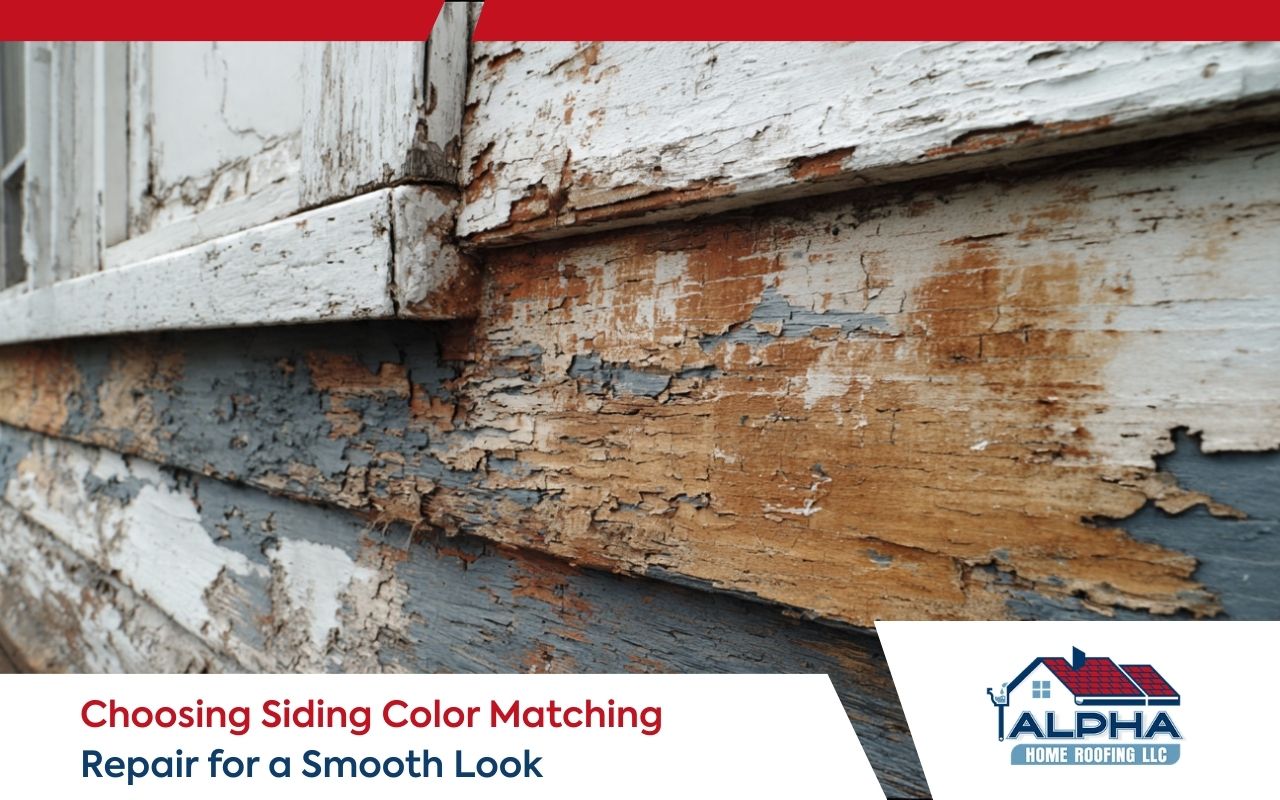
Choosing siding colors can feel like a balancing act, especially when you want a smooth repair. It’s not just about a color you like. It’s about matching what’s already there. Over time, siding can lose its original shade due to UV fade and daily wear.
This is where siding color matching repair helps. With a sharp eye and the right steps, you can get a result that hides patching. Even so, a small shade shift can change the whole look. Maker labels often use manufacturer codes, yet they are not perfect.
How UV fade changes siding over time
Sunlight can slowly weaken the color in your siding. As UV rays hit the surface, the color layer breaks down. As a result, the siding can look lighter or uneven. Even strong products can change, especially on south or west walls.
- Check walls that get the most sun first.
- Compare shaded areas to sun-facing areas.
- Note where the color looks washed out.
Because fading varies by wall, it matters for siding color matching repair. Otherwise, a new panel may look too “new.” If fading is heavy, you may repaint a wider area. That way, the finish looks more even.
Why matching the existing color matters
Matching new pieces to old siding protects the look of your home. If colors don’t line up, even neat work will stand out. Also, many people forget that color drifts over time. So, it helps to check the current shade in natural light.
- View samples outside on a clear day.
- Look from the curb and up close.
- Use a real panel or wall swatch.
For example, if you are unsure, start small. You can test a tiny area before you commit. If you want to learn what damage can do to panels, review common siding damage signs and compare them to your wall.
How manufacturer codes help, and where they fail
Most brands use manufacturer codes to label exact colors and finishes. These codes may appear on boxes, stickers, or old order papers. When you have the right code, you can often request a close match. Still, batch changes can create small shifts.
- Write down the code after any install.
- Ask for a sample piece before ordering more.
- Check samples in morning and late light.
Even with codes, siding color matching repair can be tricky. Therefore, always compare the sample to your wall under different light. If your siding is older, it also helps to learn what to expect as it ages. See how long siding usually lasts for a clear timeline.
Smart ways to blend new and old panels
Blending new material into older walls is more about small moves than big ones. First, clean the area so you see the real shade. Next, if you are painting, use a primer when the surface is raw or stained. Then, apply thin coats and soften edges.
If patching is small, feather paint outward from the center. That way, the transition looks softer. Also, check from different angles once dry. When needed, a light tint wash can reduce the “fresh” look of the new spot.
Frequently Asked Questions
What is the first step in siding color matching repair?
First, clean the area and compare the current shade in natural light. Then, test a small sample before you commit.
Can UV fade make an exact match impossible?
Yes, because older panels can lighten over time. However, blending methods can still help the repair look smooth.
Do manufacturer codes guarantee the same color?
Not always. While codes guide you, batch changes can shift color slightly. So, always confirm with a sample.
Should I replace one panel or repaint a larger area?
If the wall is heavily faded, repainting more area can look more even. If fading is mild, a small repair can work.
When should I call a pro for help?
If the match is hard to achieve, a pro can test samples and suggest the best blend. For local help, explore siding services in Elizabethtown, NJ.
Final steps to keep the repair looking even
After the repair, let the area dry fully. Then, inspect it from the street and up close. If you see a slight line, add a thin blend coat. Also, wash the wall once a year to reduce buildup that can change color.
If you want support from Alpha Home Roofing LLC, use the contact page to describe your siding type and the area you want to fix. With the right prep and checks, siding color matching repair can look natural and last.