
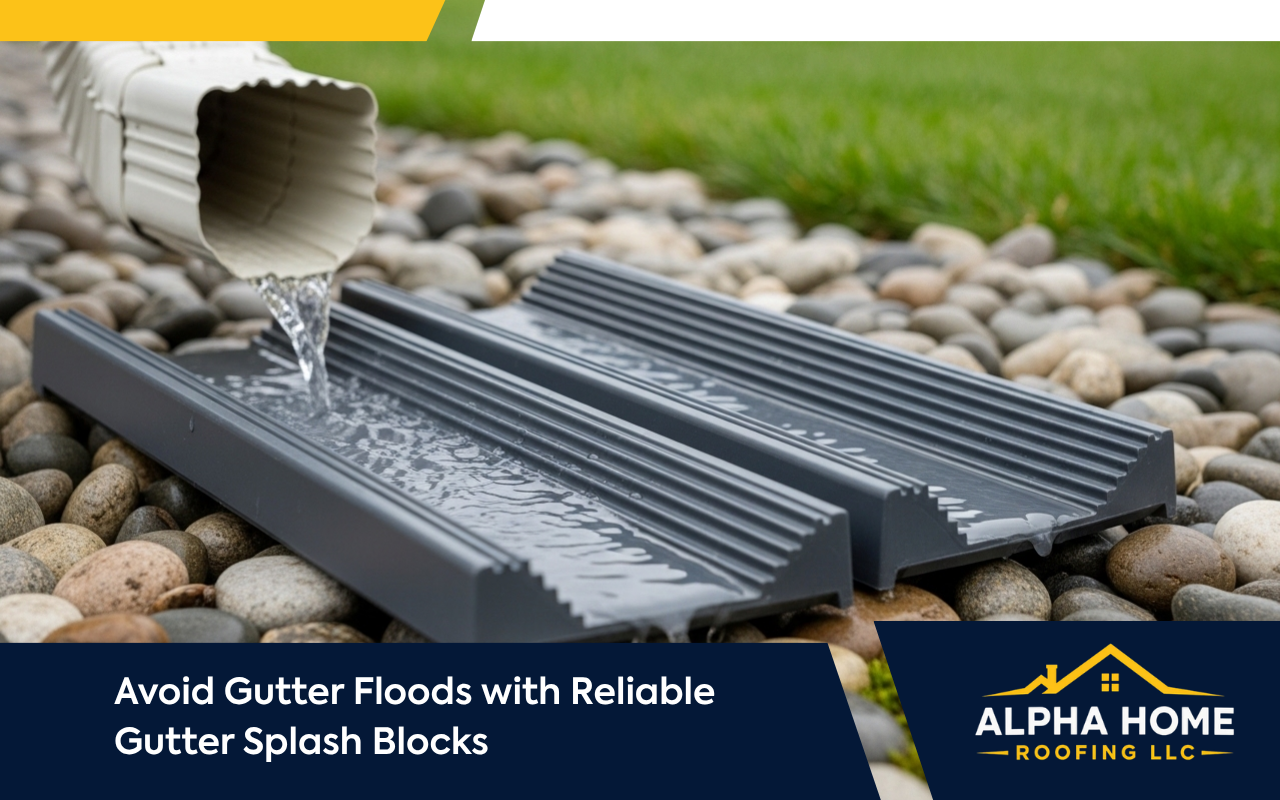
Heavy rain can quickly expose weak gutter drainage around your home. When water leaves the downspout without control, it can flood soil, damage garden beds, and move toward your foundation.
With the right setup, gutter splash blocks help guide water away from your home. At Alpha Home Roofing LLC, we help homeowners understand simple ways to protect their property before small drainage issues become bigger problems.
Better Drainage Starts at the Downspout
Proper gutter drainage protects your roofline, walls, soil, and foundation. When rainwater has no clear path, it can spill over edges, collect near the house, and slowly weaken the ground around your home.
Over time, standing water can lead to basement moisture, cracks, mold, and damaged landscaping. That is why we often look at the full drainage path, not just the gutters. You can also review our guide on gutter drainage issues to understand warning signs early.
Simple Tools That Help Prevent Water Damage
Gutter splash blocks sit at the bottom of a downspout and guide runoff away from your home. Their sloped shape helps move water forward instead of letting it dig into the soil beside your foundation.
This small part can make a clear difference during heavy rain. It helps slow the water, spread it out, and reduce damage to mulch, plants, and walkways. Alpha Home Roofing LLC uses practical drainage solutions that fit real homes and local weather needs.
What Do Splash Blocks Do for Your Home?
Many homeowners ask, what do splash blocks do besides move water? They help reduce the force of water as it leaves the downspout. As a result, the soil stays more stable, and puddles are less likely to form near the foundation.
- They guide rainwater away from the base of the home.
- They help protect soil, mulch, plants, and small garden areas.
- They support downspout erosion control during strong storms.
- They reduce the chance of water collecting near basement walls.
Smart Placement Tips for Stronger Results
Good placement is just as important as the block itself. The lower end should point away from the house, so water moves outward instead of back toward the foundation. The ground under the block should also be level and firm.
- Place the block directly under the downspout opening.
- Keep the sloped end facing away from the home.
- Use gravel under the block when soil is soft or uneven.
- Check that water flows out and does not spill over the sides.
These splash block placement tips can improve water flow and help keep your yard in better shape. If your downspouts still cause pooling, our page on downspout problems may help you spot the cause.
Common Problems When Water Has No Path
When downspout water drops straight onto the ground, the results can appear slowly. First, you may notice washed-out mulch or small puddles. Later, the soil can sink, and water may start moving toward the home.
- Soil erosion near the foundation
- Basement leaks after steady rain
- Damaged plants and exposed roots
- Stains on siding or lower walls
- Uneven walkways caused by wet soil movement
Gutter splash blocks can reduce these risks when they are placed well and checked often. Alpha Home Roofing LLC looks for simple fixes first, especially when a small change can improve drainage fast.
Choosing the Right Block for Your Yard
Splash blocks come in plastic, concrete, stone, and other sturdy materials. Plastic is light and easy to move, while concrete and stone can stay in place better during heavy rain. The right choice depends on your yard, soil, and drainage needs.
Size also matters. A block should be wide enough to catch the full stream from the downspout. For homes needing gutter installation in Elizabeth, NJ, we consider local rain patterns, roof size, and where the water should safely go.
Regular care also helps. Clear leaves, dirt, and small branches from the block after storms. For more seasonal care ideas, visit our guide on gutter maintenance tips.
Frequently Asked Questions
How far should a splash block extend from the house?
A splash block should move water away from the foundation as clearly as possible. In many cases, the block should sit under the downspout with the open end pointed toward a safe drainage area.
Can splash blocks stop all drainage problems?
Splash blocks can help with surface water, but they may not fix every drainage issue. If water still pools near the home, the gutters, downspouts, slope, or soil may need a closer look.
Are concrete splash blocks better than plastic ones?
Concrete blocks are heavier and often stay in place well. Plastic blocks are easier to move and clean. The better choice depends on your yard, water flow, and how often storms move the block.
Do I need splash blocks with every downspout?
Most downspouts benefit from a block or another drainage solution. Any spot where water exits near the home should guide runoff away from the foundation.
When should I call a gutter professional?
Call a professional when water keeps pooling, soil keeps washing away, or your gutters overflow often. Alpha Home Roofing LLC can review the setup and suggest a clear next step.
Protect Your Home Before the Next Storm
Small drainage details can prevent major stress later. With properly placed gutter splash blocks, your home has better protection against soil erosion, foundation moisture, and messy puddles after heavy rain.
Alpha Home Roofing LLC is ready to help with gutter installation in Elizabeth, NJ, drainage checks, and practical home protection. To plan your next step, reach us through our contact page today.