
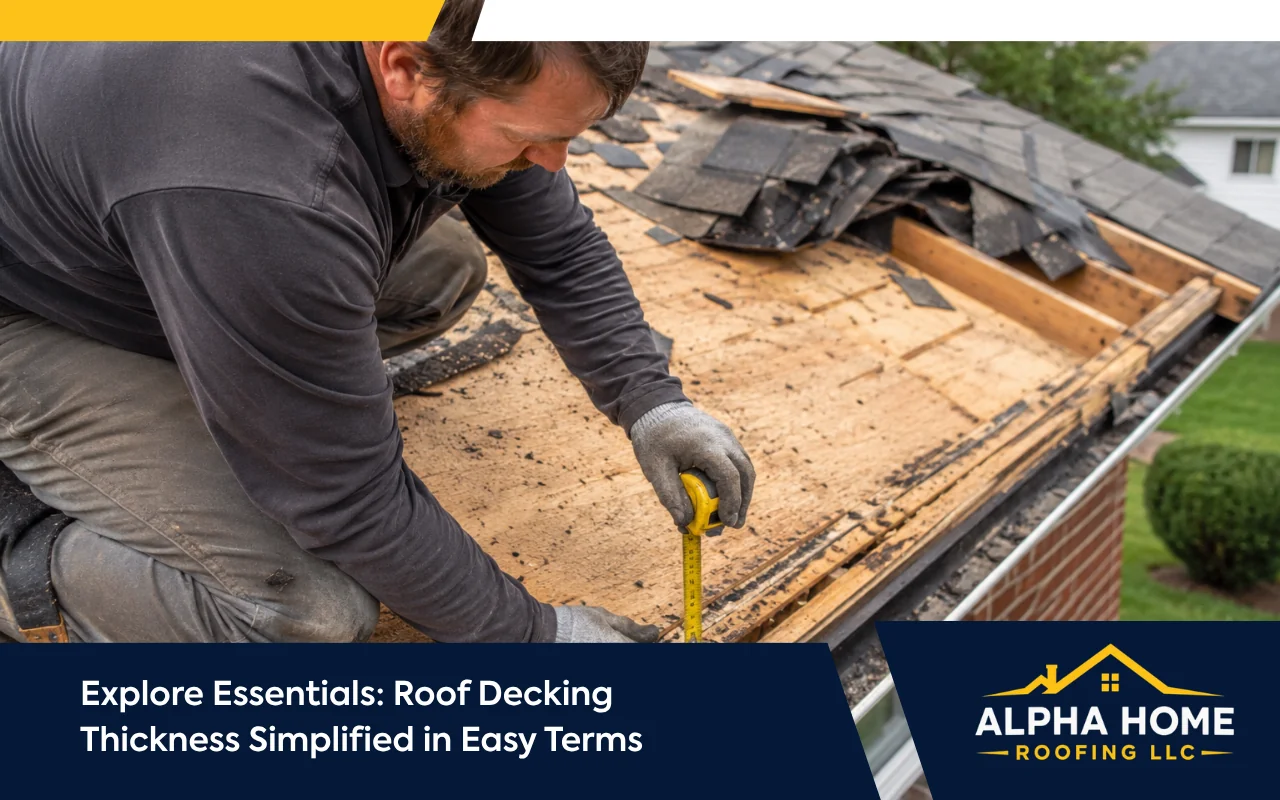
Roof decking forms the solid base beneath your shingles. Its condition and strength affect how well the entire roofing system performs. Understanding roof decking thickness can help you make better decisions before a replacement begins.
At Alpha Home Roofing LLC, we explain what homeowners should know before work starts. Our guide to roof replacement in Elizabeth, NJ also covers important planning steps for a safer and more reliable roof.
Why Deck Thickness Matters for Your Home
The roof deck spreads weight across the rafters or trusses below it. It supports shingles, underlayment, flashing, and workers during installation. When the panels are strong enough, the roof has a stable surface that can resist movement and pressure.
Panels that are too thin may bend between supports. This movement can loosen fasteners, damage shingles, and create low areas where water may collect. Proper roof structural support depends on the full system, including panel material, support spacing, and installation quality.
Key Factors That Determine Suitable Panel Strength
There is no single panel size that fits every home. Roof deck requirements depend on the structure, local rules, and the roofing materials being installed. A contractor should inspect the existing deck before deciding what can remain and what needs replacement.
- The distance between rafters or roof trusses
- The type and condition of the decking material
- Local snow, wind, and weather conditions
- The weight of the selected roofing system
- Current building requirements for the property
Our team at Alpha Home Roofing LLC can examine these details during the replacement process. This inspection helps identify weak sections that may not be visible from the ground.
How Does Decking Thickness Affect Roof Strength?
Thicker panels can provide greater resistance to bending when the supports are spaced farther apart. However, thickness alone does not guarantee a strong roof. Damaged wood, poor fastening, or moisture exposure can weaken even a panel that was originally suitable.
The correct roof decking thickness should match the spacing and load needs of the structure. It should also provide a secure surface for roofing fasteners. A professional evaluation is important because every roof frame and existing deck may have different conditions.
Plywood and OSB Decking Compared Clearly
Plywood roof decking and oriented strand board, often called OSB, are common materials for residential roofs. Both can perform well when they meet the project requirements and remain protected from ongoing moisture.
- Plywood: Made from thin wood layers placed in alternating directions
- OSB: Made from compressed wood strands bonded into panels
- Moisture response: Both materials can weaken after repeated or prolonged water exposure
- Installation needs: Both require correct spacing, fastening, and support
With Alpha Home Roofing LLC, you receive a clear explanation of the deck condition found during the project. Visible stains, soft areas, or swollen edges may point to roof sheathing damage that needs attention before new shingles are installed.
Warning Signs of Weak or Damaged Decking
Some decking problems can be seen from the attic, while others become clear only after the old roofing materials are removed. Early attention can help prevent moisture from reaching insulation, ceilings, or other parts of the home.
Watch for sagging roof areas, dark attic stains, visible mold, or wood that feels soft. Water marks around vents and chimneys may also signal a leak. Our guide to roof decking rot explains how trapped moisture can damage the wood beneath a roof.
What Happens During a Decking Inspection
A decking inspection helps determine whether the existing surface can support the new roofing system. The contractor checks both visible damage and areas that may move under normal pressure.
- The old shingles and underlayment are removed as needed.
- The exposed panels are checked for rot, swelling, cracks, or sagging.
- Fasteners and panel edges are reviewed for movement or separation.
- Weak sections are identified before new materials are installed.
- Replacement panels are selected according to the structure and applicable requirements.
When you choose Alpha Home Roofing LLC, we discuss visible concerns and practical next steps. This process helps homeowners understand why certain panels may need replacement instead of being covered by new materials.
Frequently Asked Questions
What is the standard roof decking thickness?
The required roof decking thickness varies by panel type, support spacing, roof design, and local building rules. A contractor should confirm the correct material for your home rather than relying on one general measurement.
Can new shingles cover damaged plywood?
New shingles should not be installed over soft, rotten, or badly damaged plywood. The weak section may not hold fasteners correctly. Review common signs of damaged roof sheathing before planning the project.
How can I tell whether my roof deck is rotting?
Possible signs include a sagging surface, attic moisture, dark wood, mold, and soft areas. More information about roof decking rot can help you recognize when an inspection is needed.
Is plywood better than OSB for every roof?
No single material is best for every property. Both plywood and OSB can be suitable when they match the roof design, remain dry, and are installed correctly. The existing structure and local requirements should guide the decision.
When is decking checked during roof replacement?
The most complete inspection usually happens after the old roofing layers are removed. Homeowners planning roof replacement in Elizabeth, NJ should ask how damaged panels will be identified and discussed.
Plan a Stronger Roof Replacement in Elizabeth
Correct roof decking thickness creates a stable base for the materials above it. The final choice should reflect panel condition, structural spacing, local requirements, and the needs of the new roofing system.
At Alpha Home Roofing LLC, we help homeowners understand the condition beneath their shingles before the new roof is completed. Use our contact page to discuss your roof decking concerns and prepare for a well-informed replacement.