
Attic condensation solutions for NJ homeowners can stop hidden moisture before it turns into damage. In fact, this issue often leads to stains, musty smells, and costly repairs. Because New Jersey weather shifts fast, moisture can build up quickly. Therefore, learning the signs and acting early helps protect your home and your health.
Many people notice the problem only after mold, rust, or soggy insulation appears. However, with smart steps like better airflow and a simple moisture sheet, you can reduce risk. As a result, your attic stays drier, safer, and more energy smart year-round.
Understanding Attic Condensation: Signs and Symptoms
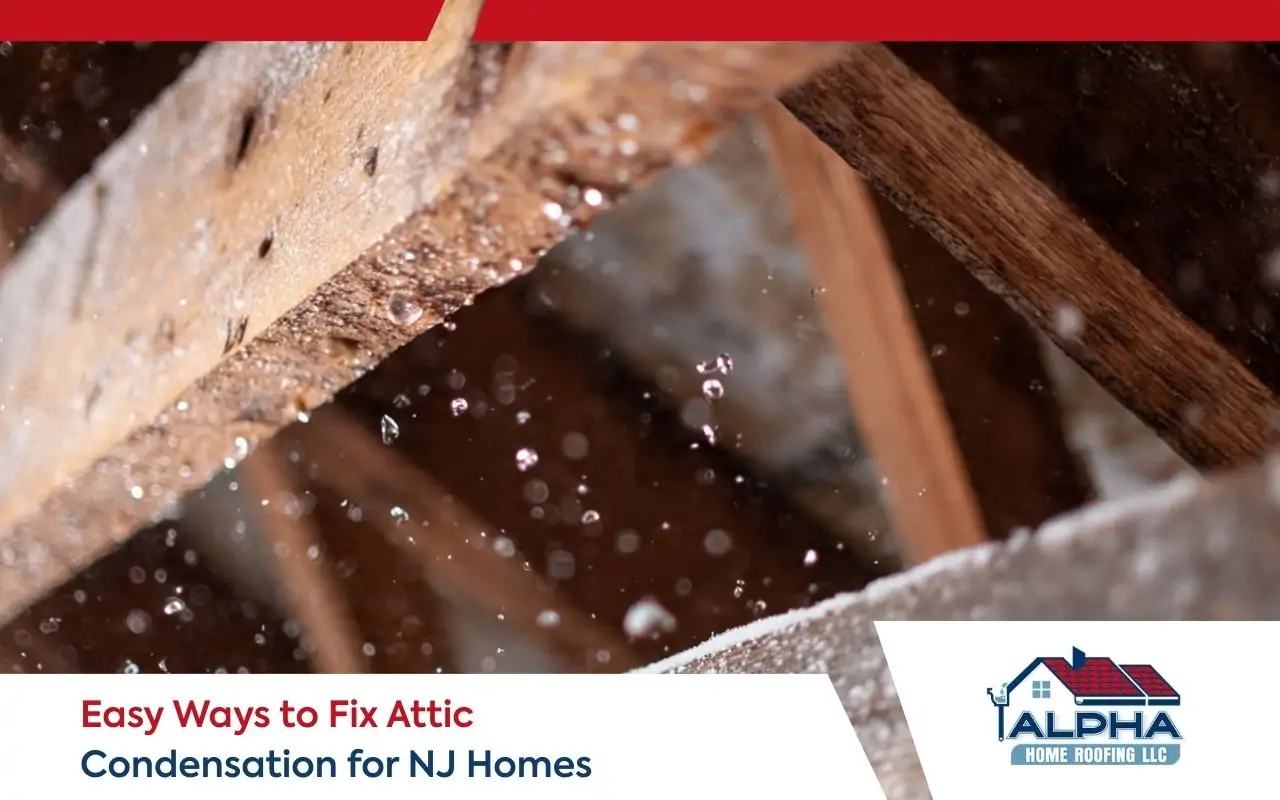
First, watch for water drops on rafters or the roof deck. In winter, warm indoor air rises and hits cold attic surfaces. Consequently, moisture turns into visible water. Also, Mold signs often show as black or green spots on wood and insulation. Meanwhile, rust on nails or metal connectors suggests moisture lingers.
In addition, notice musty odors that do not fade. That smell can signal damp air trapped above your ceiling. You might also see dark patches or stains on ceilings below the attic. To stay ahead, use a hygrometer. Ideally, humidity stays below 60%. If it is higher, Attic condensation solutions for NJ homes should start soon.
Quick checks you can do today
- Look for droplets on wood, nails, and roof decking.
- Smell for musty air near attic access points.
- Check insulation for damp, clumped, or flattened areas.
- Measure humidity and note any reading above 60%.
Impact of Attic Condensation on Home and Health
Over time, moisture can weaken wood framing and cause decay. As a result, rafters and supports may lose strength. Likewise, wet insulation loses its performance, so your home can feel colder and your heating system works harder. Additionally, metal parts can corrode, which may loosen key connections.
Just as important, damp attics can encourage mold growth. Then spores may move into living areas and affect air quality. Some people feel allergies, cough, or asthma flare-ups. Therefore, reducing attic moisture helps support a safer home for children, older adults, and anyone with breathing issues.
Why This Matters So Much in New Jersey
New Jersey swings from humid summers to cold winters. Because of these fast changes, attics face repeated warm-to-cold shifts that create moisture. In summer, humid air can enter and meet cooler surfaces from air conditioning. In winter, indoor air rises and cools quickly in the attic. Therefore, Attic condensation solutions for NJ homes should match the local climate.
Also, moisture can shorten the life of roofing layers and flashing. Moreover, some product warranties may require proper moisture control. For a helpful starting point, review a practical inspection list in this roof inspection checklist for attic moisture risks. Then, you can spot problems before they grow.
Assessing Ventilation Issues in Your Attic
Proper airflow is a strong first defense. Without fresh air in and damp air out, humidity rises and condensation forms. Start by checking soffit, ridge, gable, or roof vents for blockage. For example, insulation can cover intake vents, and debris can clog exhaust paths. As a result, air may not move as intended.
To test quickly, hold a small tissue near a vent on a windy day. If it moves, air is likely flowing. If it stays still, you may have a blockage or too few vents. Track humidity again after any changes. In many cases, Attic condensation solutions for NJ homes begin with clearing and balancing intake and exhaust vents.
Ventilation fixes that often help
- Clear blocked soffit vents by pulling insulation back safely.
- Remove debris from ridge or roof vents when accessible.
- Add vents if your attic has limited intake or exhaust.
- Consider an attic fan if humidity stays high.
Installing and Maintaining a Vapor Barrier
A Vapor barrier helps stop moist indoor air from reaching cold attic surfaces. Typically, it sits on the warm side of insulation and reduces moisture travel. Before installing, make sure the attic floor is clean and insulation is dry. Then lay sheets evenly, overlap seams, and seal them with the right tape. Importantly, seal around pipes, wires, and light openings.
Afterward, check the barrier once a year for tears or loose seams. If you find damage, tape small rips right away and replace sections that will not seal. Also, avoid stepping directly on the sheet to prevent punctures. When paired with good airflow, this step supports lasting Attic condensation solutions for NJ homeowners.
Choosing the Right Insulation to Reduce Condensation Risk
Insulation works best when it is dry and evenly placed. Fiberglass batts and blown-in cellulose are common choices and can work well when installed correctly. However, gaps and compression reduce performance. For air sealing plus insulation, spray foam can help, yet it often needs a pro. Even then, you still need balanced airflow.
When comparing options, review moisture behavior and how easy each type is to place correctly. Also, confirm you are not blocking soffit intakes. If you want to see broader options for your home, explore roofing and attic services that support moisture control to match materials with your attic setup.
Tips for Regulating Humidity Levels in Your Attic
Humidity control keeps condensation from starting. First, keep a digital hygrometer in the attic so you can track changes. If humidity climbs above 60%, act quickly. For example, sealing gaps around vents, pipes, and wiring can cut the moist air that escapes upward. In addition, a correctly sized dehumidifier can help in accessible areas.
Also, use a mix of passive vents and mechanical help when needed. On dry days, brief airing can help remove trapped moisture. Most importantly, combine sealing, airflow, and insulation so each layer supports the others. That balanced approach is often the most reliable path to Attic condensation solutions for NJ homes.
Simple humidity-control habits
- Seal ceiling gaps so indoor moisture stays inside living areas.
- Keep bath and kitchen fans vented outdoors, not into the attic.
- Use a hygrometer and record readings during cold snaps.
- Keep vents clear so airflow stays steady all year.
Professional Help: When to Consult an Expert
Sometimes DIY fixes are not enough. If you see ongoing Mold signs after improving airflow and sealing gaps, call a pro. Likewise, if moisture returns every winter, an expert can find hidden leak paths. They may use air leakage testing and heat imaging to spot problem areas.
A licensed contractor can also confirm your setup fits local expectations and safe installation rules. If you want a direct next step, use the contact Alpha Home Roofing LLC page to discuss your attic conditions and the best fix plan.
Frequently Asked Questions
What usually causes attic condensation in NJ?
Most often, warm indoor air leaks upward and meets cold attic surfaces. Because winter swings can be sharp, condensation can form quickly.
How do I know if I have a ventilation problem?
If humidity stays above 60% or you see droplets on rafters, airflow may be weak. Also, blocked soffits can reduce fresh air intake.
Are mold spots always a sign of attic condensation?
Not always, yet they are a common clue. Therefore, check for damp insulation, musty odors, and water droplets to confirm the cause.
Where should a vapor barrier go?
It is usually placed on the warm side of insulation to slow moisture travel. Seal seams and gaps so it stays continuous.
When should I call a professional?
If moisture persists after basic fixes, or if mold keeps returning, call an expert. They can find hidden air leaks and recommend safe upgrades.
Long-Term Prevention and Maintenance
Finally, keep a simple routine so your attic stays dry. Check vents every six months and clear debris or nests. Then inspect the moisture sheet for tears and repair them quickly. Also, keep insulation fluffy and evenly spread, because compressed insulation can trap moisture.
Track humidity trends across seasons and respond early to changes. When you stay consistent, you reduce repairs and protect comfort. With steady care, Attic condensation solutions for NJ homeowners deliver long-term value and peace of mind.