
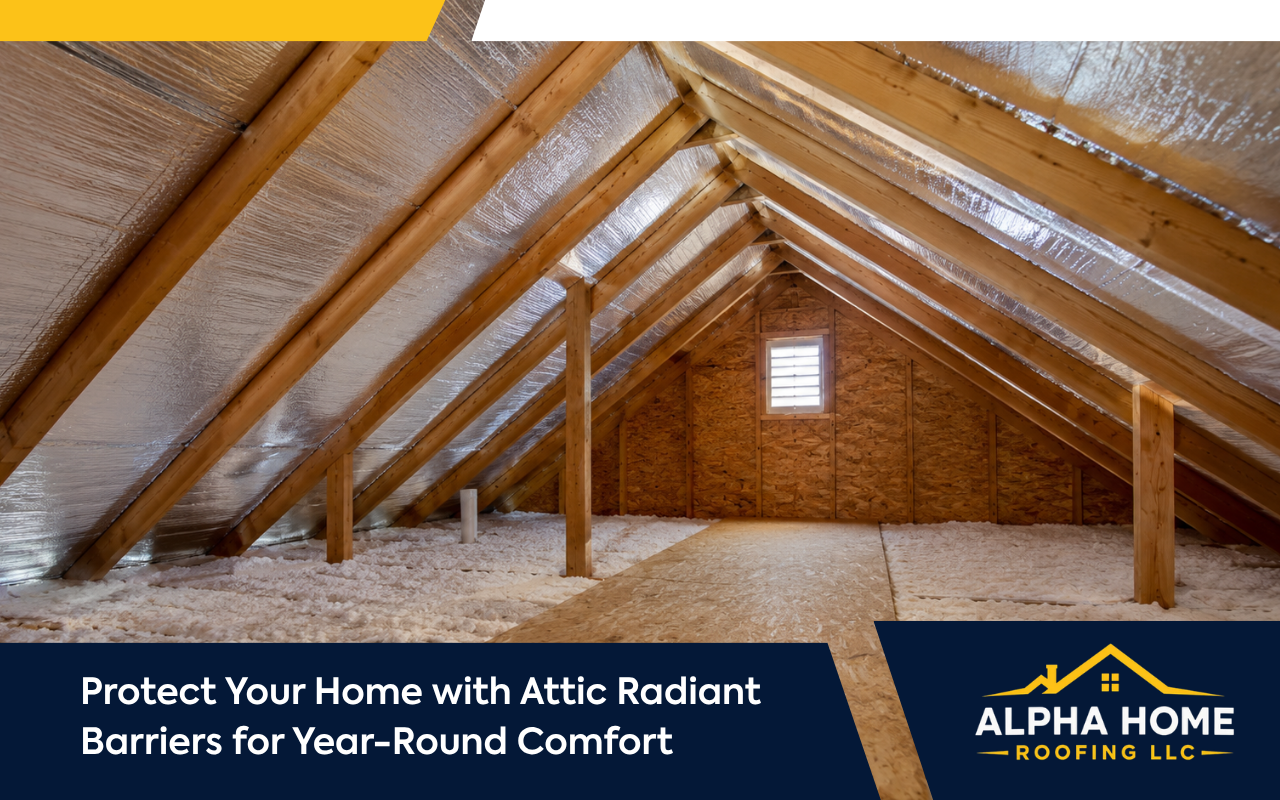
Protecting your home from heat, cold, and rising energy use starts in the attic. At Alpha Home Roofing LLC, we look at how your roof, insulation, and attic ventilation work together before recommending the right solution.
Attic radiant barriers can help reflect heat, support steady indoor comfort, and reduce the stress placed on your cooling system. For many homeowners, they are a smart way to improve comfort without changing the entire home.
Understanding How Radiant Barriers Protect Attics
A radiant barrier is a reflective material installed in an attic to slow radiant heat transfer. When sunlight heats the roof, that heat can move into the attic and make rooms below feel warmer. The barrier reflects much of that heat back toward the roof deck.
This is different from standard insulation. Insulation slows heat that moves through materials, while radiant barriers focus on heat that travels by radiation. Used together, they can support better comfort during summer and help reduce heat movement during colder months.
Key Benefits for Comfort and Efficiency
The right attic setup can make your home feel more stable during the year. Radiant barrier benefits often include better comfort, lower heat buildup, and less pressure on heating and cooling equipment.
- Reduced attic heat during hot sunny days
- Improved comfort in rooms below the attic
- Support for attic energy savings over time
- Less strain on your air conditioning system
- Better performance when paired with insulation and airflow
Our team at Alpha Home Roofing LLC reviews your attic conditions so the barrier can work as part of a complete roofing system, not as a stand-alone product.
How Do Attic Radiant Barriers Reduce Heat?
Attic radiant barriers work best when the reflective side faces an open air space. This air space allows the material to reflect heat instead of trapping it. If the barrier is pressed against insulation or covered with dust, its performance can drop.
Good placement is important for attic heat reduction. Gaps, folds, or blocked airflow can limit results. That is why the attic should be checked for proper ventilation, insulation levels, and moisture concerns before installation begins.
Installation Details Homeowners Should Know
Radiant barriers may be installed along rafters, roof decking, or attic framing, depending on the attic layout. Some products come in rolls, while others use panels or reflective coatings. The best choice depends on access, roof shape, and the condition of the attic.
- The reflective surface should face the correct direction
- An air gap should remain open for better reflection
- Wiring, vents, and attic access points must stay clear
- The barrier should not block needed attic airflow
- Damaged or loose sections should be secured properly
Working with a roofing contractor in Elizabeth, NJ helps make sure the installation supports safe airflow and long-term performance.
Ventilation, Condensation, and Moisture Control
A radiant barrier should not replace proper ventilation or insulation. If warm indoor air reaches a cold attic surface, condensation can form and create moisture problems. That is why it is helpful to review attic condensation solutions before adding reflective materials.
With Alpha Home Roofing LLC, you get guidance that looks at comfort, airflow, and moisture together. This helps protect the attic while supporting attic energy savings in a practical way.
Choosing the Right Local Roofing Partner
A skilled roofing team can help you understand which attic upgrades make sense for your home. The right partner will explain the process, review attic access, and avoid claims that sound too broad or unrealistic.
- Ask how ventilation will be checked before installation
- Review the type of radiant barrier being recommended
- Confirm how attic access and obstacles will be handled
- Discuss how the barrier works with existing insulation
- Request clear guidance for simple maintenance checks
Energy-focused updates can also support a more responsible home improvement plan. For related ideas, explore our guide to eco-friendly roofing.
Frequently Asked Questions
Are attic radiant barriers the same as insulation?
No. Insulation slows heat that moves through materials, while a radiant barrier reflects heat that travels through air space. For many homes, both can work together for better comfort.
Can a radiant barrier help with attic heat reduction?
Yes, it can help reduce radiant heat entering the attic during sunny weather. Results depend on placement, airflow, roof conditions, and the current insulation in your home.
Should ventilation be checked before installation?
Yes. Good airflow helps the attic stay balanced and supports better performance. You can review our roof ventilation guidance to see why airflow matters.
Can radiant barriers help with energy savings?
They may support attic energy savings by reducing heat gain and easing cooling demand. When you choose Alpha Home Roofing LLC, we also consider insulation, airflow, and attic moisture risks.
How can I schedule an attic review?
You can use our contact page to request guidance for your attic. A review can help decide whether a radiant barrier fits your home.
Start Planning a More Comfortable Attic
Attic radiant barriers can be a practical upgrade when your home feels too hot upstairs or your cooling system works harder than it should. They are most effective when installed with proper airflow, moisture control, and insulation in mind.
At Alpha Home Roofing LLC, we help homeowners look at the full attic system before making changes. To discuss comfort, heat control, and the right next step for your home, request attic guidance from our team.