
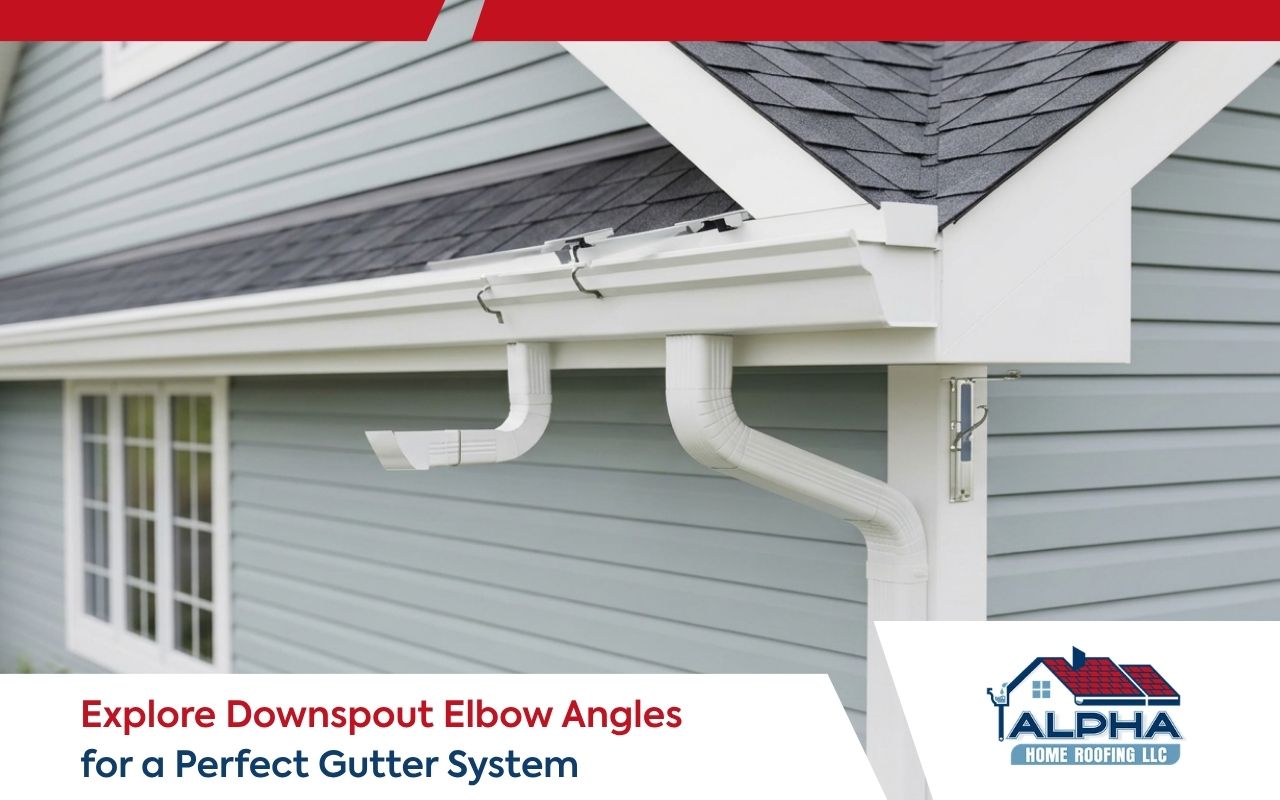
Many homeowners do not think about downspout elbow angles until water starts pooling near the house. Yet this small part of the system helps move water in the right direction and lowers the risk of foundation trouble, soil washout, and avoidable repairs.
At Alpha Home Roofing LLC, we believe a better gutter system starts with smart planning. When you understand downspout elbow angles, you can improve drainage, protect your home in Elizabeth, NJ, and make each storm easier on your property.
Why Elbow Angles Matter for Home Drainage
Water needs a clear path from the roof to a safe discharge point. The wrong bend can slow the flow, trap debris, or drop water too close to the foundation. That is why elbow placement for drainage matters as much as the gutter itself.
We often see problems that begin with a small angle mistake and turn into larger drainage issues. With the right setup, downspout elbow angles help reduce erosion, limit standing water, and support a longer-lasting gutter system.
Common Downspout Elbow Types Used at Homes
Most homes use simple fittings that guide water around corners or toward the ground. The most common downspout elbow types are made to fit standard gutter systems and work well for basic drainage layouts.
- 45-degree elbows for smoother direction changes.
- 90-degree elbows for tighter turns near walls or ground level.
- Offset elbows for areas with trim, ledges, or other obstacles.
Each option works best in a different spot. We recommend choosing the shape that keeps water moving with as little resistance as possible.
Choosing the Best Angle for Your Layout
The best downspout angle depends on your yard slope, soil, landscaping, and where the water needs to go. A gentle bend may work better on flat ground, while a sharper turn can help push water away from the house more quickly.
At Alpha Home Roofing LLC, we look at the full drainage path, not just one fitting. That approach helps us choose downspout elbow angles that match the home and lower the chance of future overflow or splashback.
Problems Caused by Poor Elbow Placement
When elbows are set the wrong way, water can collect near the base of the home and create bigger issues over time. This may lead to soggy soil, stained siding, basement moisture, or damage around walkways and planting beds.
- Pooling water near the foundation.
- Soil erosion around downspout exits.
- More debris buildup inside sharp bends.
- Extra wear that may lead to gutter repair in Elizabeth, NJ.
If you notice any of these signs, it helps to inspect the elbows after the next heavy rain. Small changes in elbow placement for drainage can make a big difference.
Tools and Materials That Help the Job
A careful adjustment usually starts with a few basic tools and the right replacement parts. Good materials help the system stay sealed, hold its shape, and keep water moving in the right direction.
- Tape measure and level for checking alignment.
- Gloves and goggles for safer work.
- Snips, screws, or rivets for secure fitting.
- Sealant and matching elbows for a tight connection.
When a system shows leaks, clogs, or poor flow, we also suggest reviewing nearby weak points. You can learn more through our guide to common downspout problems and our gutter leaking solutions page.
How to Adjust Elbows for Better Water Flow
Start by checking where the water lands during a storm or while running a hose through the gutter. Then inspect each elbow for dents, loose joints, or bends that point water too close to the home.
Next, loosen the fasteners, shift the fitting to the needed position, and tighten everything once the direction looks right. If the system still drains poorly, the issue may involve a wider slope or runoff problem, which we cover in our gutter drainage issues resource.
How Can You Keep Elbows Working Longer?
Routine care helps protect your gutter system through every season. Leaves, dirt, and ice can change the way water moves, so regular checks are one of the easiest ways to prevent trouble.
Alpha Home Roofing LLC recommends inspecting elbows at least twice a year and after major storms. Replacing bent or loose fittings early can preserve flow and reduce the need for larger repairs later.
Frequently Asked Questions
What are the most common downspout elbow angles?
The most common choices are 45-degree and 90-degree elbows. These cover most home drainage layouts and can guide water around corners or down toward a safe exit point.
How do I know which elbow angle is right for my home?
The right choice depends on the wall layout, yard slope, and where the water should discharge. Looking at the full drainage path helps you choose a fitting that keeps water away from the foundation.
Can the wrong elbow angle cause water damage?
Yes. Poorly placed elbows can drop water too close to the house, increase pooling, and lead to soil erosion or basement moisture over time.
When should I replace a downspout elbow?
You should replace it when it is bent, leaking, loose, or blocked in a way that cleaning cannot fix. Damaged elbows often affect flow more than homeowners expect.
Who should I call for help with gutter drainage?
If you are dealing with repeat overflow, leaks, or poor runoff, Alpha Home Roofing LLC can help inspect the system and suggest practical fixes. You can reach Alpha Home Roofing LLC through our contact page.
Improving Gutter Performance in Elizabeth, NJ
The right downspout elbow angles support better drainage, less mess around the home, and more confidence during heavy rain. When the layout fits the property, the system can move water farther from the structure and help protect both the foundation and the landscape.
Alpha Home Roofing LLC is proud to support homeowners who want practical answers and lasting results. When you need help with downspout elbow types, the best downspout angle, or trusted gutter repair in Elizabeth, NJ, our team is ready to help.