
Replacing a loose gutter spike can feel hard at first, especially when water is already pooling near your home. Still, the job becomes easier when you understand what to check, what tools to use, and when to ask for help.
At Alpha Home Roofing LLC, we know small gutter parts can protect big areas of your home. This guide explains gutter spike replacement in simple steps, so you can act before loose gutters lead to leaks, wood damage, or foundation problems.
Understanding Gutter Spikes And Gutter Screws
Gutter spikes are long metal fasteners that hold the gutter to the fascia board. They are often installed with a hammer and can work well when the wood is still strong. However, they may loosen over time as weather, water, and movement affect the gutter line.
When comparing gutter spikes vs screws, screws usually offer a tighter hold because they grip the wood better. Spikes can still be useful for some repairs, but screws may be a better choice when the gutter pulls away often or handles heavy rain.
Clear Signs Your Gutter Spikes Are Failing
Loose gutters often show early warnings before serious damage appears. Knowing the signs gutter spikes fail can help you take action before water reaches your siding, basement, or foundation.
- Gutters sag, tilt forward, or pull away from the roofline.
- Spike heads stick out or leave gaps near the fascia board.
- Water spills over the gutter instead of moving to the downspout.
- Rust stains appear around old spikes or fastener holes.
- Water pools close to your foundation after rain.
When these issues appear, gutter spike replacement may stop the problem from getting worse. For wider damage, our gutter damage repair services can help restore safe water flow.
Tools And Materials For A Safer Repair
The right tools make the work safer and cleaner. Before climbing a ladder, gather everything you need and place it where you can reach it without stretching.
- Stable ladder with ladder stabilizers
- Work gloves and safety glasses
- Hammer, pry bar, or claw hammer
- Drill with screwdriver bits
- Replacement spikes, screws, washers, or hangers
- Waterproof sealant, caulk, or wood filler
- Small level, tape measure, tarp, and bucket
Choose rust-resistant fasteners when possible. Galvanized or stainless-steel parts can last longer, especially in wet weather. Alpha Home Roofing LLC recommends checking the fascia board before installing anything new, because weak wood will not hold a new fastener well.
Preparing The Area Before Starting Work
Clear the ground near the gutter before you begin. Move chairs, planters, toys, and yard tools away from the wall. Then, place a tarp under the work area to catch debris and protect the grass.
Check the weather before starting. A wet ladder, strong wind, or icy ground can make a simple job unsafe. Keep tools in a belt or small bucket, and avoid leaning too far to either side while you work.
How Do You Replace Gutter Spikes Safely?
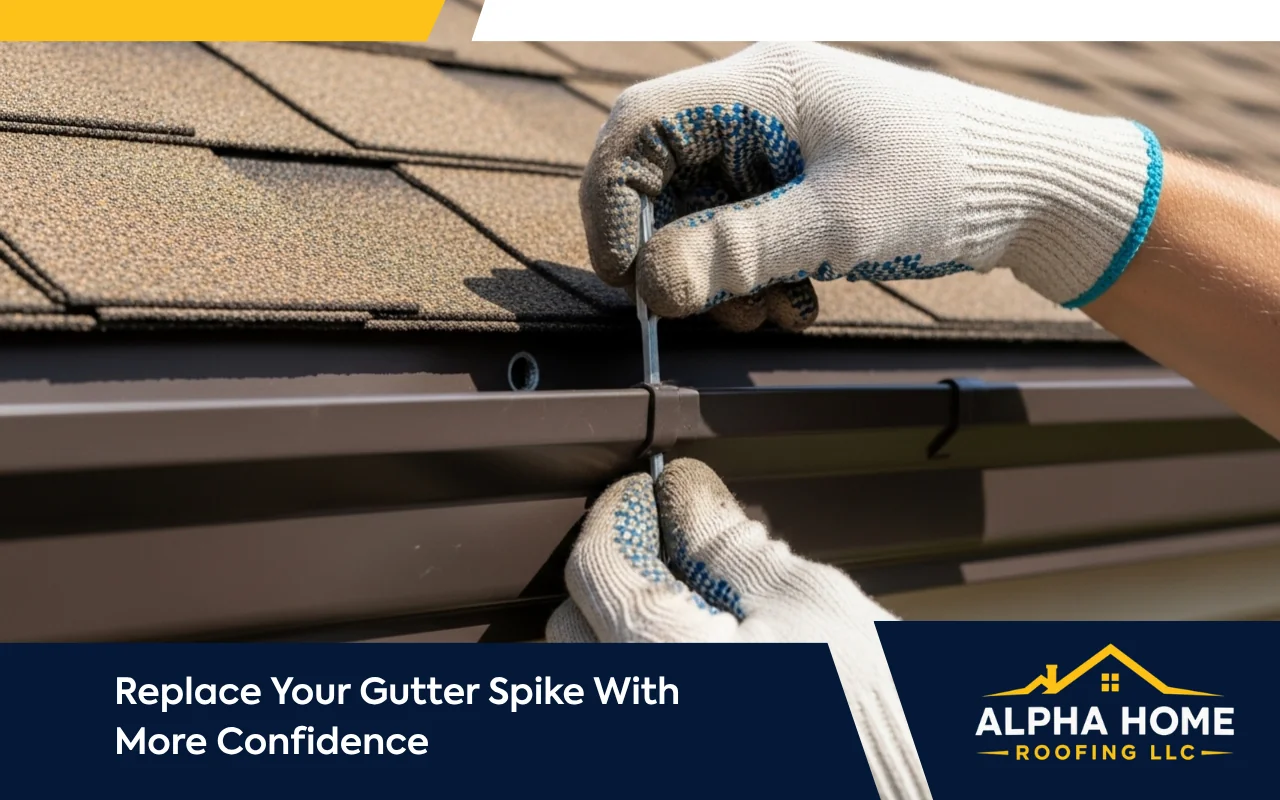
Start by loosening the old spikes with a hammer or pry bar. Pull each one out slowly, so you do not crack the fascia board. Work from one end of the gutter to the other and support the gutter as needed.
After removing the old fasteners, clean the holes and check the wood. If the holes are too wide, fill them with exterior caulk or wood filler and let the area dry. Then, place the gutter back against the fascia and install the new fasteners with even spacing.
When learning how to replace gutter spikes, do not overtighten the new fasteners. The gutter should sit snug against the fascia without crushing the washer or bending the gutter. If the gutter is badly bent, review our gutter replacement warning signs before making more repairs.
Testing The Gutter After New Fasteners
Once the fasteners are in place, test the gutter with a garden hose. Start at the end farthest from the downspout and watch how the water moves. It should flow smoothly without spilling over the front edge.
Look for drips near seams, corners, and fastener heads. If you see a small leak, dry the area and apply waterproof sealant. For gutter repair in Elizabeth, NJ, Alpha Home Roofing LLC can inspect the full system when a quick fix does not solve the issue.
Frequently Asked Questions
Can I replace gutter spikes myself?
Yes, you can replace them yourself when the gutter is easy to reach, the fascia is solid, and you have safe ladder access. For high gutters or damaged wood, professional help is safer.
Are screws better than gutter spikes?
Screws often hold better because they grip the fascia more firmly. Spikes may still work for minor repairs, but screws are usually stronger for long-term support.
How often should I check my gutter fasteners?
Check them at least twice a year and after strong storms. A quick inspection can help you find loose areas before water damage begins.
What happens if loose spikes are ignored?
The gutter may sag, overflow, or pull away from the roofline. Over time, this can lead to siding stains, rotted wood, basement leaks, or foundation trouble.
When should I call Alpha Home Roofing LLC?
Call us when the gutter keeps pulling away, the fascia feels soft, or water still overflows after cleaning. We can check the system and recommend the right repair.
Keep Your Gutters Strong For Every Season
Regular care helps your gutters protect your home year-round. After a gutter spike replacement, keep an eye on the slope, fasteners, seams, and downspouts to make sure water keeps moving away from the house.
- Clean leaves and debris before heavy rain seasons.
- Check for loose fasteners after storms.
- Watch for water near the foundation.
- Use our gutter repair checklist during routine inspections.
- Request help through our contact page when the repair feels unsafe.
Alpha Home Roofing LLC is here to help you protect your home with careful gutter repair in Elizabeth, NJ. With the right steps and timely support, your gutter system can stay secure through rain, wind, and changing seasons.