
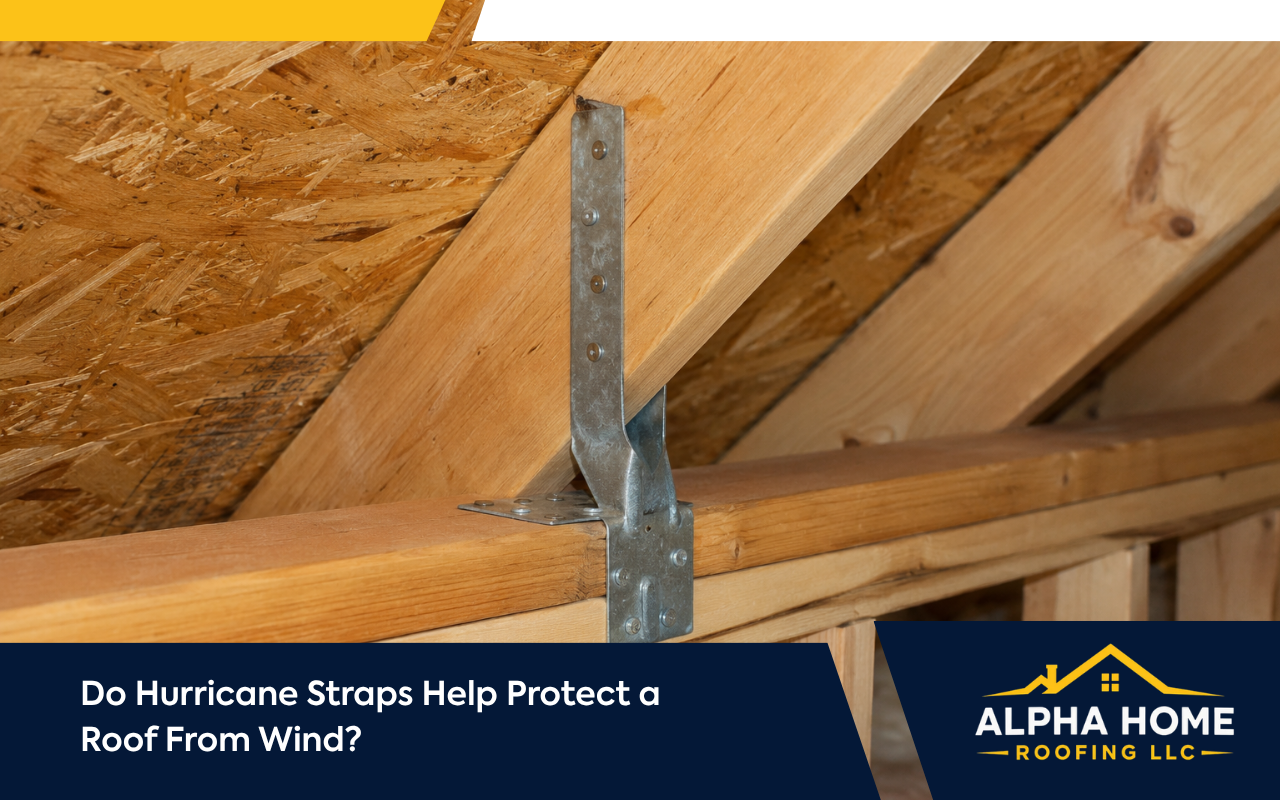
Severe wind can place heavy pressure on every roof connection. Hurricane straps roofing strengthens the points where rafters or trusses meet supporting walls, helping the roof remain attached during dangerous weather.
At Alpha Home Roofing LLC, we help homeowners understand how these connections support a safer, more secure roofing system. Straps are only one part of complete protection.
Proper fasteners, sound roof decking, and regular inspections also matter. Our guide to storm-resistant roofing options explains how these elements work together to improve a home’s defense against wind and rain.
Understand How Hurricane Straps Strengthen Roof Connections
Hurricane straps are metal connectors installed between roof framing and the walls below. They create a stronger attachment than basic nails alone.
When wind pushes upward against the roof edges, the straps help keep rafters or trusses connected to the wall plates. This connection supports a continuous load path.
Wind forces move from the roof through the walls and toward the foundation instead of concentrating at one weak point. Correctly installed connectors can improve structural stability and lower the risk of major separation during a severe storm.
Know What Causes Roof Uplift During Severe Winds
Fast-moving air creates pressure changes around a building. Wind that moves over and around the roof can produce an upward pulling force.
This force is often strongest near roof edges, corners, overhangs, and other exposed areas. If framing connections are weak, uplift may loosen roof materials or separate structural components.
Once part of the roof opens, wind and rain can enter the home. Internal pressure may then increase, placing even more stress on the remaining roof system.
Our team evaluates visible roofing conditions and connection concerns that may affect roof wind resistance. An inspection can identify loose materials, damaged edges, weakened decking, or other concerns before the next major storm.
Key Takeaway
Hurricane straps support the connection between the roof and walls. They work best as part of a complete wind-resistance plan that also checks decking, fasteners, edges, and roof condition.
Compare Wind-Risk Signs and Protection Steps
Homeowners may not always see roof-to-wall connections from the ground. However, visible roof damage, attic concerns, or storm-related movement can show when an inspection makes sense.
Roof Wind Protection Guide
| Concern | Why It Matters | Helpful Next Step |
|---|---|---|
| Lifted shingles near roof edges | Edges and corners often face strong wind pressure. | Schedule a roof inspection before the next storm. |
| Loose or rusted visible straps | Corrosion or missing fasteners may reduce connection strength. | Have accessible connectors reviewed professionally. |
| Cracked wood around framing | Straps cannot perform well if the wood is damaged. | Check framing condition before planning upgrades. |
| New attic leaks after wind | Wind-driven rain may enter through lifted or weakened areas. | Inspect roofing, flashing, decking, and connections. |
| Older home with unknown upgrades | Connection methods may not be clear without review. | Request an attic or roof connection evaluation. |
Review the Benefits of Stronger Roof-to-Wall Connections
Secure roof connections support more than the metal straps themselves. They help the roof act as one connected system when exposed to strong gusts and changing wind pressure.
Roof Connection Benefits
- Improved resistance to upward wind forces at roof edges
- Reduced risk of rafters separating from supporting walls
- Better support for complete hurricane roof protection
- Lower chance of wind-driven rain entering through structural openings
- Greater confidence when preparing for severe weather
These benefits depend on correct installation and a roof structure that is already in suitable condition. Straps cannot repair damaged wood, loose decking, or deteriorated framing.
Those problems must be identified and addressed as part of a complete protection plan.
Key Takeaway
Stronger roof-to-wall connections can support roof uplift prevention, but they cannot replace needed repairs to damaged decking, framing, shingles, or fasteners.
Schedule a Roof Connection Inspection at the Right Time
Many roof connections are hidden inside an attic or behind finished materials. Homeowners may not know whether straps are present, correctly fastened, or compatible with the current structure.
A professional evaluation can provide useful information without relying on guesswork. It also helps identify whether other roof repairs should happen before connection upgrades.
When to Request an Inspection
- Schedule an inspection after strong winds or a major storm.
- Request an evaluation when buying an older home.
- Check connections before replacing a complete roofing system.
- Inspect visible straps when corrosion or loose fasteners appear.
- Review the roof before making broader wind-resistance upgrades.
An inspection should consider the roof covering, decking, framing, fasteners, flashing, and exposed edges. This broader review helps determine whether connection improvements alone are enough or whether other repairs should come first.
Use Professional Installation for Reliable Uplift Prevention
Installing hurricane straps roofing requires more than attaching metal pieces to visible wood. Each connector must join the correct structural members.
It must also use the specified fasteners in the required holes to achieve its intended holding strength. Access can be difficult in an existing home.
Some connections may be reached through the attic, while others may require limited removal of roofing or wall materials. A qualified roofing contractor in Elizabeth, NJ can determine a practical approach based on the home’s design and present condition.
With Alpha Home Roofing LLC, you receive guidance based on the roof structure rather than a one-size-fits-all recommendation. We examine accessible connection points, look for damaged materials, and explain which steps may support better roof uplift prevention.
Key Takeaway
Professional installation matters because connector type, fastener placement, framing condition, and access all affect how well roof straps can perform.
Watch for Signs Your Roof Needs Stronger Connections
Roof connection problems are not always visible from the ground. However, certain warning signs may point to movement, wind stress, or damage that should be inspected promptly.
Roof Connection Warning Signs
- Loose or lifted shingles near roof edges
- Gaps between roof framing and supporting walls
- Rust, bending, or missing fasteners on visible connectors
- Cracked wood around rafters, trusses, or wall plates
- New attic leaks after strong wind or heavy rain
- Unusual movement, noise, or vibration during storms
These signs do not always mean that hurricane straps are missing. They may indicate broader roofing or structural concerns.
A careful inspection can separate minor surface damage from problems that affect the roof’s ability to resist wind.
Frequently Asked Questions
Do all homes need hurricane straps?
Not every home has the same wind exposure or construction method. However, secure roof-to-wall connections can benefit many properties in areas affected by strong storms. A professional inspection can determine whether straps are present and whether other upgrades may improve protection.
Can hurricane straps stop all storm damage?
No single roofing feature can prevent every type of storm damage. Straps support structural connections, but shingles, flashing, decking, gutters, and roof edges must also remain in good condition. Use our roof wind damage checklist to identify areas that may need attention.
Can straps be added to an existing roof?
In many cases, connectors can be added during a retrofit, but access and installation methods vary. Some framing points are easy to reach from the attic, while others are concealed. At Alpha Home Roofing LLC, we assess accessible areas before recommending an installation approach.
How often should roof connections be inspected?
A review is useful after severe weather, when visible damage appears, or before a major roofing project. Routine roof care also helps reduce conditions that may weaken surrounding materials. Our roof damage prevention guide covers practical maintenance steps.
Who should install hurricane straps?
Installation should be handled by a professional who understands roof framing, connector placement, and local requirements. Proper assessment is important because damaged wood or weak decking may need repair first. You can request a professional roof connection inspection to discuss your home’s needs.
Plan Stronger Roof Protection in Elizabeth, NJ
A secure roof begins with strong connections and a clear understanding of the structure’s condition. When you choose Alpha Home Roofing LLC, we evaluate the roof as a complete system and explain practical steps that may improve wind resistance without creating unnecessary fear or confusion.
Preparing before severe weather can reduce uncertainty and reveal problems while there is still time to address them. To discuss hurricane straps roofing or other wind-protection concerns, contact our roofing team in Elizabeth, New Jersey and arrange an informed roof evaluation.