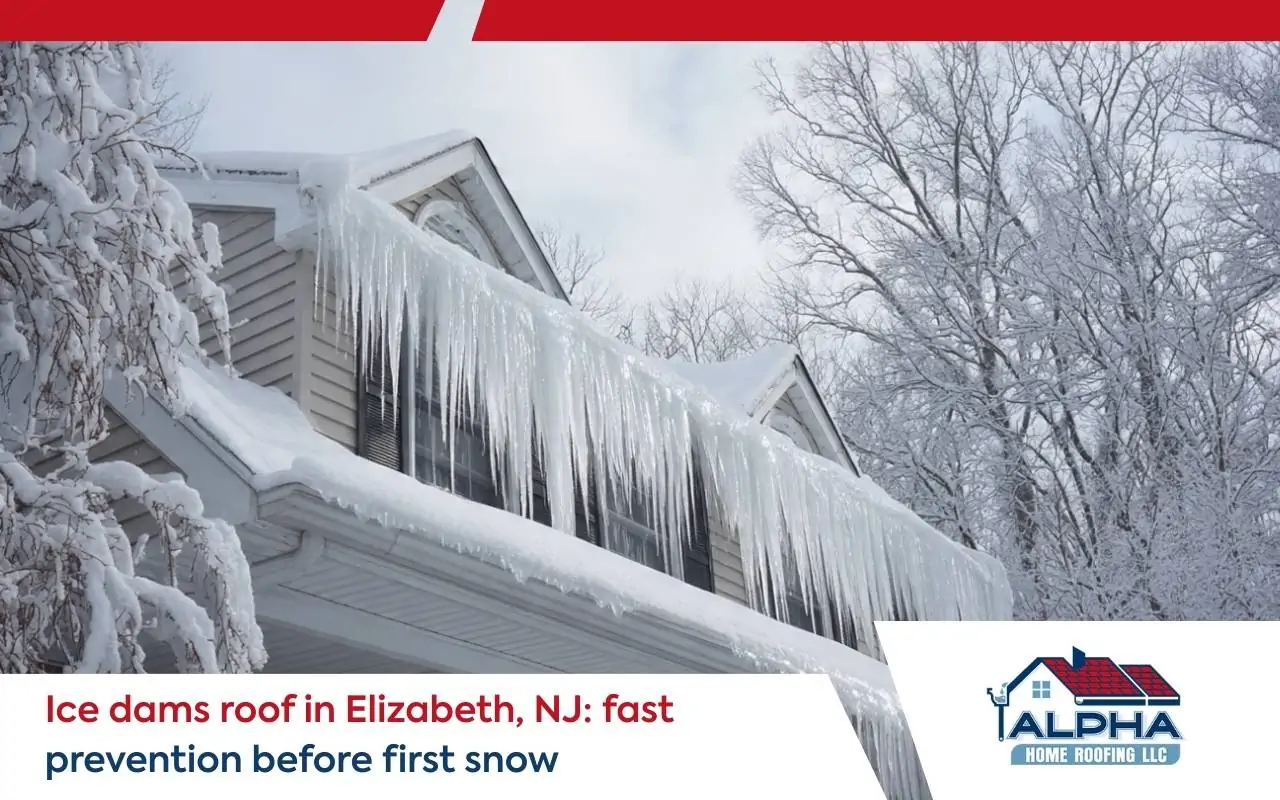
Observe the calm winter scenery in Elizabeth and notice a silent issue known as ice dams roof in Elizabeth, NJ. These frozen blocks appear when melted snow refreezes near the roof edges, causing leaks and serious home trouble. As temperatures fall, you want quick steps that protect your home and help you enjoy the season without stress.
Because simple actions work well, you can use attic insulation, roof ventilation, and roof heat cables to stop ice dams. These options help new and long-time homeowners avoid damage and stay safe during winter. Since cold weather arrives fast, learning these tips now protects your home from ice dams roof in Elizabeth, NJ and gives you peace of mind.
Importance of Preventing Ice Dams
Check early signs of ice along gutters because ice dams roof in Elizabeth, NJ can create sudden leaks. When water gathers behind ice, it sneaks under shingles and harms ceilings, walls, and insulation. If you ignore it, moisture can cause mold or warped wood and turn your cozy home into a large repair task.
Because prevention is simple, steps like checking attic insulation or adding roof heat cables can block water from backing up. Acting early keeps your home strong, protects family health, and keeps your property safe in winter. A well-kept roof and attic system also support energy savings and comfort all year long.
Understanding the Formation of Ice Dams
Notice how warm air rises and heats certain roof areas. This heat melts snow that then refreezes near the colder edges. Soon, a hard ice ridge forms and traps more water behind it.
As this ice grows, pressure increases on your gutters and shingles. By understanding this cycle, you can focus on attic insulation, roof ventilation, and smooth drainage to prevent ice dams roof in Elizabeth, NJ from appearing again.
Efficient Attic Insulation: Key to Ice Dam Prevention
- Keep warm air from leaking into the attic.
- Use materials like fiberglass batts or blown-in cellulose.
- Seal gaps around vents and fixtures.
Improve attic insulation to keep roof temperatures even. Good insulation works like a blanket and limits snowmelt near the roof edges. In Elizabeth, a well-insulated attic becomes the first tool against ice dams roof in Elizabeth, NJ during the cold months.
Also, replace old insulation to reach the right R-values for local homes. When insulation is thick enough, snow stays frozen or melts evenly, avoiding new ice at the edges. Better attic insulation cuts energy use and boosts comfort.
Proper Roof Ventilation: Ensuring a Healthy Roof
- Let cold air flow under the roof deck.
- Choose ridge, soffit, or gable vents.
- Inspect vents to avoid blockages.
Match attic insulation with strong roof ventilation to keep the roof surface close to outdoor temperatures. Poor ventilation traps heat and melts snow unevenly, which then refreezes near the eaves. Because airflow matters, using ridge vents and soffit vents supports balanced temperatures.
Clear vents often to ensure steady air movement. Add baffles to keep insulation from blocking soffit vents. When ventilation and insulation work together, you reduce ice dams roof in Elizabeth, NJ and extend the life of your roof.
Installation of Roof Heat Cables: A Preventative Measure
Think about installing roof heat cables along risky roof edges to melt snow in key areas. These cables keep water moving and stop dangerous ice buildup. In Elizabeth, heat cables support attic insulation and roof ventilation for better winter protection.
Pick self-regulating cables that adjust heat based on outdoor temperatures. Place them in a zigzag pattern along eaves and gutters. Test cables before snow arrives so the system works as expected. With proper use, roof heat cables add another shield against ice dams roof in Elizabeth, NJ.
Signs of Potential Ice Dam Formation
Look for wet spots on ceilings or water near gutters. These early signs show that melted snow is not draining. Also, listen for dripping sounds in the attic after cold nights and warm days.
Pay attention to large icicles, because they often signal uneven melting. Check attic rafters for frost, a hint that moisture entered the space. If you see ice at the roof edge every year, rethink your insulation, roof ventilation, or roof heat cables.
DIY Tips for Ice Dam Prevention
- Use a roof rake to remove snow after storms.
- Seal attic air leaks with caulk or weatherstripping.
- Install gutter guards to guide water away.
Gather simple tools like a snow rake to clear fresh snow. This reduces weight and stops early melting. Seal attic leaks to prevent warm air from escaping. Add insulation where needed to reach New Jersey’s recommended R-values.
Keep gutters clear and add downspout extensions to guide water away from your home. If you feel safe, install roof heat cables before winter by following instructions closely.
Professional Assistance: When to Call in the Experts
Call experts when you see heavy frost or warped roof boards. A trained roofer can review your insulation, ventilation, and roof condition to offer full solutions. Their skills help you avoid future damage.
Hire an electrician for complex heat cable setups. Also, insulation specialists can check for air leaks, moisture, or mold and install modern materials correctly. When experts combine insulation, roof ventilation, and roof heat cables, they create a strong defense against ice dams.
Maintaining Ice Dam Prevention Year-Round
Check attic insulation yearly to stay ahead of winter issues. After snow melts, inspect the roof deck for moisture. Fix any trouble before summer work begins so roofing stays in good shape.
Clean vents and gutters each fall to maintain good airflow. Trim tree branches to limit debris. Test roof heat cables during a mild cold snap to ensure they work well.
Frequently Asked Questions
1. What causes ice dams on homes in Elizabeth?
Uneven roof temperatures and poor attic insulation create melting and refreezing cycles.
2. How can attic insulation stop ice dams?
It blocks warm air from rising and keeps roof temperatures steady.
3. Are roof heat cables safe to use?
Yes, when installed correctly and tested before winter.
4. How does roof ventilation help prevent ice dams?
It moves cold air across the roof deck and stops uneven melting.
5. When should I call a professional?
Call experts when you see leaks, frost, or roof damage that feels unsafe to fix on your own.
Protecting Your Home from Ice Dams
Addressing ice dams early prevents major repairs. When you focus on attic insulation, roof ventilation, and roof heat cables, you build a strong winter defense. Stay proactive with seasonal checks and use expert help when needed.
For detailed upkeep steps, explore the roof maintenance guide. If you need quick help or want expert support, visit our contact page here: Contact Alpha Home Roofing.