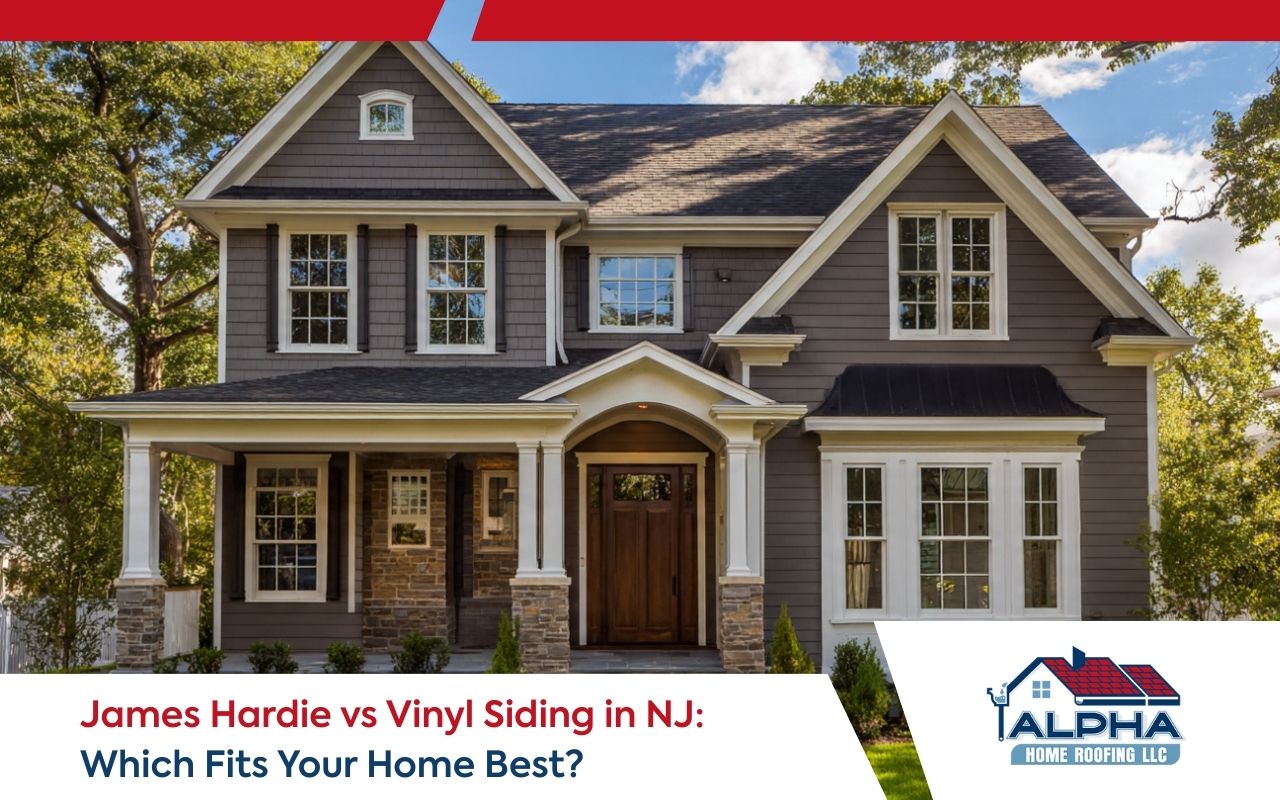
Consider the exterior of your New Jersey home as its most fashionable outfit. Just like how styles change with time, so do the materials we choose to dress our homes in. The battle between James Hardie and vinyl siding is akin to choosing between a timeless classic and a modern staple.
Both have their own unique flair and benefits, but which one truly complements the Garden State’s demanding climate and enhances your home’s curb appeal? This comparison uncovers key differences, from durability in harsh weather to the confidence a strong warranty can bring.
Material Composition
James Hardie fiber cement siding blends cement, fine sand, and cellulose fibers from wood pulp. This mix is pressed and baked into tough panels that resist splitting, swelling, and rotting. It also uses engineered pigments for steadier color, so repainting may feel less frequent.
Vinyl siding is made from PVC resin mixed with UV blockers and colorants. It is lighter and more flexible, and it comes pre-colored, so painting is not needed after installation. Still, thickness differs, which can affect how each option feels on the wall.
- James Hardie boards feel dense and solid, which can signal a higher-end finish.
- Vinyl panels are thinner and can flex under pressure without cracking right away.
- Both offer smooth, wood-grain, and shingle-like looks, yet fiber cement often shows deeper texture.
When planning James Hardie vs vinyl siding in NJ, many homeowners notice that fiber cement tends to resist fading better, which supports long-term curb appeal. If you are also noticing problems on your current exterior, you can review common warning signs through siding damage signs.
Durability and Weather Resistance
James Hardie siding is known for strong durability. Its fiber cement build helps it resist high winds, hail, and moisture common in New Jersey coastal storms and humid summers. It also handles temperature swings well, so it is less likely to warp or buckle over time.
Vinyl siding can manage rain and sun, yet it may turn brittle in extreme cold. As a result, it can crack if hit by heavy hail. Both options include features that help reduce mold and mildew, but maintenance and quick repairs still matter.
- Fiber cement resists termites and insects because it has no wood food source.
- Vinyl uses stabilizers to slow fungal growth, but gaps can trap moisture if ignored.
- Freeze-thaw cycles can be tough, so material stability becomes important in NJ.
For homeowners comparing James Hardie vs vinyl siding in NJ, the fiber cement track record in repeated storms can feel like a steady advantage. When you need guidance tailored to your home, Alpha Home Roofing LLC can help you weigh these weather factors with practical recommendations.
Maintenance Needs
James Hardie siding needs occasional upkeep, mainly cleaning and repainting every 5 to 10 years. Its primer technology helps paint stick longer than traditional wood. Even so, checking caulk around windows and trim helps reduce water entry and protects curb appeal.
Vinyl siding is often described as low-maintenance. It does not need repainting because the color runs through the panel. However, it can warp near high heat, like grills or reflective glass, so placement and habits matter.
- Wash both materials with water and mild cleaner to remove dirt and mildew.
- Replace cracked vinyl panels quickly to keep a tight weather barrier.
- Inspect trim, flashing, and seals to reduce hidden moisture issues.
If you want to understand how new materials can change comfort and value, explore practical improvements in new siding benefits. Alpha Home Roofing LLC can also explain how upkeep differs by neighborhood exposure and sun direction.
Curb Appeal and Design Options
James Hardie offers many colors and textures, including smooth looks and deeper wood-grain patterns. It can match clapboard, shingles, or board-and-batten styles that fit many New Jersey towns. Because it holds paint well, it also supports long-lasting curb appeal.
Vinyl also comes in many colors and profiles, plus matching trim and soffits. Still, texture depth is often lighter than fiber cement. Over time, sun exposure can fade some shades, so color choice can shape long-term curb appeal.
During James Hardie vs vinyl siding in NJ planning, curb appeal is not only about style. It also ties to how well the surface keeps its finish after seasons of weather. Alpha Home Roofing LLC can help align design goals with your home’s architecture and light exposure.
Installation Process
James Hardie installation takes more skill and time. Boards must be cut with special blades to reduce chipping, and nailing must be spaced correctly for movement. Caulking and edge work also matter because they help block water behind the siding.
Vinyl installation is usually faster. Panels lock together on a starter strip, and crews overlap rows so water sheds outward. Even so, correct underlayment and flashing still matter, because moisture problems can start behind any siding type.
- Fiber cement rewards precise installation with a tight, solid finish.
- Vinyl installs quickly, yet it still needs proper flashing details.
- Contractor experience often affects final look and long-term performance.
If you are weighing pros and cons, Alpha Home Roofing LLC can walk you through what installation looks like on your specific wall system, including tricky corners, trim, and vent areas.
Cost and Long-Term Value
In many cases, James Hardie costs more upfront because materials and skilled labor are higher. However, many homeowners see it as a long-term investment that supports durability and curb appeal. Over time, repainting may be the main expense instead of frequent panel swaps.
Vinyl often has a lower starting cost and quicker labor time. It also keeps maintenance simple since painting is not needed. Still, fading or cracking can lead to panel replacement, which can narrow the lifetime cost gap more than expected.
When comparing James Hardie vs vinyl siding in NJ, long-term value depends on climate exposure, goals, and how long you plan to stay in the home. Alpha Home Roofing LLC can help you map these factors into a practical decision.
Warranty and Peace of Mind
James Hardie commonly comes with a strong warranty that can cover manufacturing issues for decades, often including fade and cracking terms depending on the line and region. This can add confidence for homeowners who want predictable performance over the years.
Vinyl warranties vary by maker and often run for decades as well, yet they may be prorated. Because of that, it helps to read the fine print, including what triggers coverage and whether labor is included during replacement.
In James Hardie vs vinyl siding in NJ decisions, warranty can feel like a safety net. Alpha Home Roofing LLC can review key warranty details with you so you know what protection you are truly getting.
Environmental Impact
James Hardie fiber cement uses materials like cement, sand, and cellulose fibers. Its long lifespan can reduce replacement cycles, which can lower waste over time. In some areas, fiber cement may also have end-of-life recycling options.
Vinyl is made from petrochemicals and can be recyclable, yet PVC recycling access differs by region. Its light weight can reduce shipping emissions, and its no-paint nature can reduce ongoing maintenance materials.
For homeowners focused on sustainability during James Hardie vs vinyl siding in NJ, the best choice often depends on lifespan, local recycling access, and the maintenance you expect to do.
Customer Feedback in New Jersey
Many New Jersey homeowners like the solid feel and clean finish of James Hardie, especially after coastal storms. Others like vinyl for its easy cleaning and affordable entry point. Still, satisfaction often depends on installer quality and how quickly damage is repaired.
Since conditions can change by town and exposure, local experience matters. Alpha Home Roofing LLC can share practical insights based on common NJ weather patterns and the siding issues they often see on homes.
Frequently Asked Questions
Which option handles NJ storms better: James Hardie or vinyl?
In many cases, fiber cement performs well in high winds and hail. However, correct installation and flashing details matter for both materials.
Does vinyl siding crack in cold New Jersey winters?
It can become more brittle in extreme cold. Therefore, impacts from hail or debris may cause cracks, especially on older panels.
How does warranty coverage usually compare between the two?
James Hardie often offers longer, stronger coverage terms, while vinyl can vary and may be prorated. Even so, reading the fine print is key.
Which siding improves curb appeal more in NJ neighborhoods?
James Hardie often provides deeper texture and paint options that hold up well. Vinyl can still look great, yet some bold colors may fade faster.
How do I know if my siding needs replacement before choosing a new material?
Look for warping, cracks, loose panels, and moisture signs around trim. For a clearer checklist, review these siding damage signs.
Conclusion
Choosing between James Hardie and vinyl siding in New Jersey depends on your budget, your style goals, and how much durability you want over time. James Hardie stands out for durability, texture, and long-term curb appeal, while vinyl stands out for simpler upkeep and a lower starting cost.
To decide with confidence, connect with Alpha Home Roofing LLC through the contact page. Alpha Home Roofing LLC can help you compare the best fit for your home, your climate exposure, and your long-term plans.