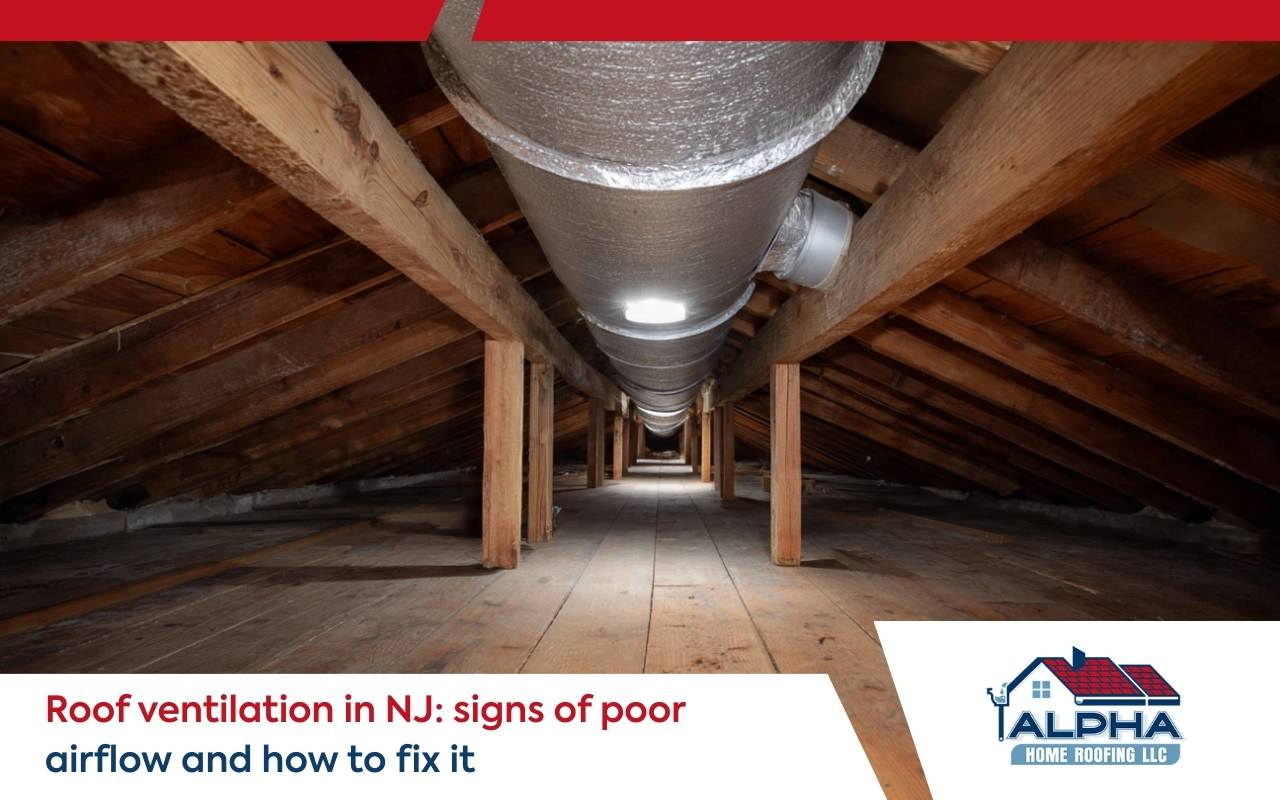
Roof ventilation in NJ plays a key role in keeping a home comfortable and safe. Because New Jersey weather changes often, issues like extreme heat or cold can appear in attics. When your attic feels too hot in summer or too cold in winter, you may face poor airflow and growing attic moisture that harms your home.
Additionally, small clues such as peeling paint, damp insulation, and shifting temperatures can point to weak airflow. When your ridge vents or soffit vents do not move air well, problems grow fast. By noticing these issues early, you can protect your home and keep it energy-efficient throughout the year.
Importance of roof ventilation in NJ
Roof ventilation in NJ supports healthy airflow that limits attic moisture and prevents mold and structural concerns. Since New Jersey experiences humid summers and freezing winters, moisture can collect inside the attic and weaken wood or insulation. Over time, this damage becomes costly, yet proper airflow helps avoid these issues.
Moreover, a balanced system using ridge vents and soffit vents keeps indoor temperatures stable. Because hot air leaves at the top and cool air enters at the eaves, your HVAC system works less. As a result, your home stays comfortable and energy use stays lower. Use the roof maintenance guide to learn how airflow supports long-term home care.
Signs of poor roof ventilation
Homeowners may notice high humidity, musty odors, or dark stains on ceilings when airflow weakens. Because attic moisture builds up fast, these early warnings help you act in time. You might also feel extreme heat from the ceiling in summer or see frost on attic rafters in winter.
These signs often mean airflow struggles to escape. When you track these changes early, you can stop mold, attic moisture, and ice dams before they grow worse.
Peeling paint: a warning of weak airflow
Peeling paint near the roofline often hints at extra moisture moving from the attic into wall spaces. Over time, this trapped moisture causes paint to break away and exposes wood to outdoor conditions. If ignored, this leads to wood rot and attracts pests.
Improving airflow through ridge vents and soffit vents helps reduce this moisture. Also, clearing blockages or adding vent baffles supports healthy movement. For extra guidance, review the roof inspection checklist to catch early trouble spots.
Identifying damp insulation issues
Wet insulation signals that attic moisture stays trapped and cannot escape. Because humid air condenses on cool surfaces, water drips onto insulation and reduces its ability to keep your home warm. This raises energy use and makes rooms feel cold.
Replacing wet insulation without improving airflow only solves part of the issue. Instead, check for blocked soffit vents or missing baffles so fresh air reaches the ridge vents and keeps insulation effective.
Unusual temperature shifts in the attic
Attic temperatures that rise or fall sharply often result from weak airflow. Because trapped hot air builds in summer, rooms feel warmer and cooling costs rise. During winter, heat escapes through an unvented roof and creates cold spots that lead to ice dams.
Monitoring attic temperatures helps confirm if airflow works correctly. Pair temperature checks with an inspection of ridge vents and soffit vents to ensure movement stays balanced.
Understanding common ventilation systems in NJ
Most homes rely on intake and exhaust vents to keep roof ventilation in NJ working smoothly. Soffit vents draw fresh air into the attic while ridge vents release warm air from the top. This steady exchange keeps air moving and reduces attic moisture.
Some homes also use gable vents or powered fans, yet these systems often support rather than replace a ridge-and-soffit setup. When you understand how each part works, you can spot airflow problems with ease.
Improving roof ventilation: easy solutions
- Clear away insulation or debris blocking soffit vents.
- Add baffles to keep airflow channels open.
- Install a continuous ridge vent if your roof lacks one.
- Check that intake and exhaust vents match your attic size.
Because airflow relies on open paths, small changes can improve circulation fast. Just follow local safety rules when working on your roof.
Professional help: when to call an expert
Some issues require trained support, especially when attic moisture has damaged wood or insulation. A certified roofer can inspect deck conditions and confirm whether ridge vents and soffit vents fit your attic’s needs. When mold grows beyond easy cleaning or ice dams return often, expert help becomes essential.
Professional audits also reveal blocked airflow patterns that homeowners might miss. For complete roofing options, explore the roofing services offered to support long-term attic health.
Benefits of proper roof ventilation
- Lower energy bills throughout the year.
- Reduced attic moisture and mold risk.
- A longer lifespan for roofing materials.
- More stable indoor temperatures.
- Improved indoor air quality for your family.
Because proper airflow reduces moisture and balances heat, roof ventilation in NJ helps protect your home and supports a healthier living environment.
Frequently Asked Questions
What causes weak airflow in attics?
Blocked soffit vents, damaged ridge vents, or missing baffles often restrict airflow and allow attic moisture to build up.
How often should I check my attic ventilation?
Review your attic every season, especially after humid summers or freezing winters, to catch signs of moisture or heat buildup.
Can poor airflow raise energy bills?
Yes, because trapped heat forces your HVAC system to work harder, raising cooling and heating use.
Do all homes need ridge vents?
Not always, yet ridge vents paired with soffit vents create steady airflow that supports most homes in New Jersey.
Should I replace insulation if it feels damp?
You should replace it, yet also fix airflow problems first so new insulation stays dry and effective.
Ensuring long-term home health
Keeping airflow steady through roof ventilation in NJ guards your home against attic moisture, mold, and energy loss. When you watch for signs like peeling paint, wet insulation, and shifting attic temperatures, you can act early.
Whether you rely on DIY improvements or call experts for deeper issues, healthy airflow ensures comfort, durability, and lasting home protection. If you need tailored guidance, you may reach out through the contact page for support.