
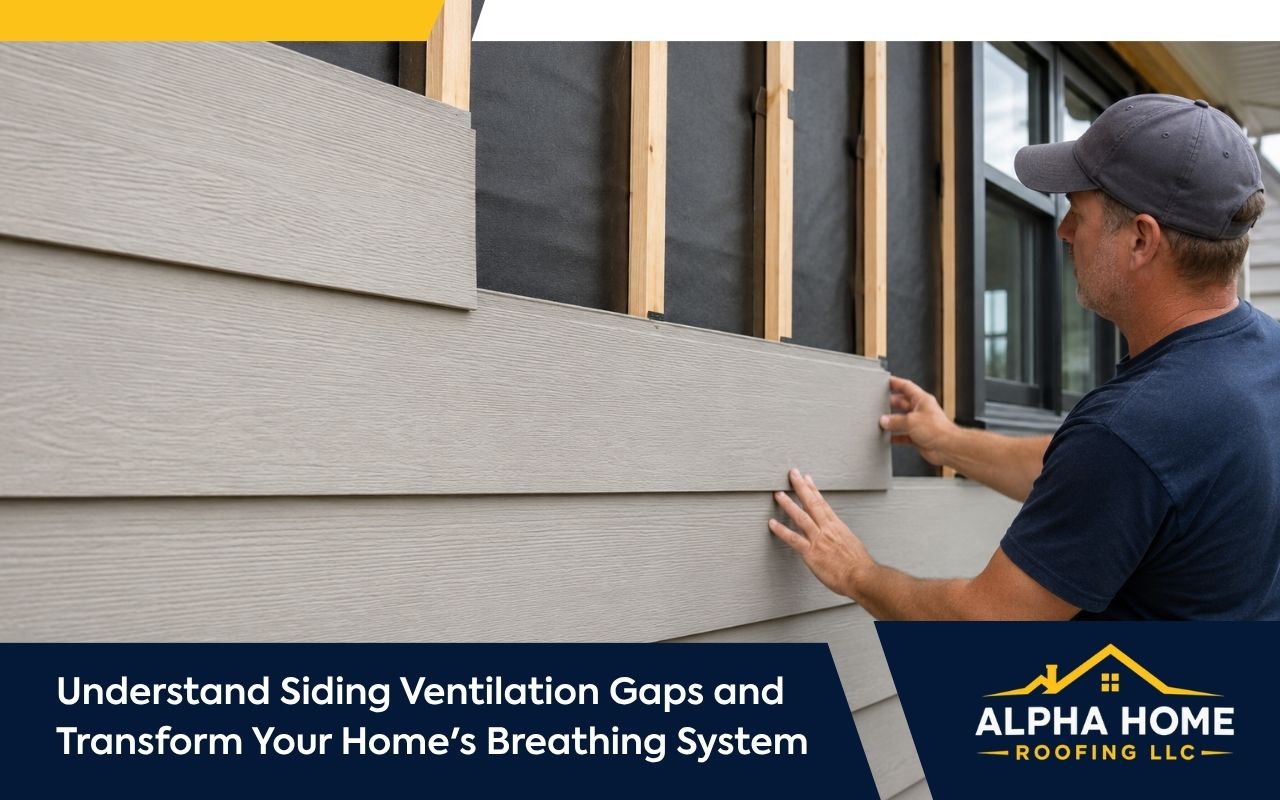
Siding ventilation gaps help your home release trapped air and moisture before damage starts. At Alpha Home Roofing LLC, we look at siding as more than an outer layer; it is part of a full wall system that needs balance, drainage, and airflow.
When siding, house wrap, and wall space work together, your home can stay drier for longer. A smart setup starts with the right barrier, which is why many homeowners compare ventilation with house wrap and siding protection.
How Do Siding Ventilation Gaps Protect Walls?
Siding ventilation gaps create small spaces where air can move behind the panels. This airflow helps dry water vapor, rain entry, and damp air that may settle between the siding and the wall sheathing.
Without these spaces, moisture behind siding can stay trapped for too long. Over time, that dampness may lead to stains, soft wood, mold growth, peeling paint, or siding that no longer sits flat against the home.
Wall Ventilation Importance for Long-Term Protection
Wall ventilation importance becomes clear when you think about daily weather changes. Warm days, cold nights, rain, humidity, and wind can all affect the wall cavity behind your siding.
With Alpha Home Roofing LLC, you get a team that understands how small exterior details can affect the full home. Proper ventilation helps reduce hidden moisture risks and supports better siding performance through each season.
Homeowners who want better thermal control may also benefit from reviewing energy efficiency siding options before planning updates.
Common Signs of Moisture Behind Siding
Moisture behind siding is not always easy to see right away. Many warning signs begin small, but they can point to larger wall concerns if they are ignored.
- Musty smells near exterior walls or lower rooms.
- Warped, buckled, or loose siding panels.
- Dark stains, mildew, or mold on siding surfaces.
- Peeling paint or swollen trim around windows and doors.
- Soft spots near wall sheathing, corners, or lower siding edges.
Rainscreen Siding System Basics for Better Drying
A rainscreen siding system adds a planned air space behind the siding. This space lets water drain down and lets air move through the wall area, so damp materials can dry more naturally.
Our team at Alpha Home Roofing LLC may recommend this approach when a home needs stronger moisture control. It is especially useful in areas where rain, humidity, and temperature shifts can challenge exterior walls.
A rainscreen siding system also works well with proper expansion planning. For related guidance, review our page on siding expansion gaps.
Maintenance Steps That Keep Airflow Open
Good ventilation depends on open paths for air and water. A few simple checks can help protect the siding system and keep small issues from becoming major repairs.
- Clear leaves, dirt, and debris from lower siding edges.
- Check weep holes and vent paths after heavy storms.
- Look for blocked areas near trim, corners, and roof lines.
- Avoid sealing areas that were designed to let air move.
- Schedule an inspection when stains or warping appear.
When Local Siding Support Makes Sense
Calling a siding contractor in Elizabeth, NJ can be a smart step when you notice water stains, panel movement, or repeated dampness near exterior walls. Local conditions can affect how siding should be installed and maintained.
When you choose Alpha Home Roofing LLC, we review visible siding areas and look for signs that airflow may be blocked. This helps homeowners make informed choices before hidden moisture causes more damage.
- Ask for an exterior review before replacing large siding areas.
- Check whether ventilation gaps are missing, sealed, or blocked.
- Review drainage points near the bottom of the siding.
- Discuss better moisture control before new siding installation.
Frequently Asked Questions
What are siding ventilation gaps?
They are small spaces behind or within the siding system that allow air to move. Siding ventilation gaps help walls dry when water vapor or rain gets behind the siding.
Why does moisture behind siding matter?
Moisture behind siding can affect wood, insulation, paint, and indoor comfort. It may also lead to mold or decay when damp areas cannot dry properly.
Can house wrap replace siding ventilation?
No. House wrap can help manage water, but it does not replace airflow. A stronger wall system often combines wrap, drainage, and ventilation, as explained in our house wrap and siding guide.
Are expansion gaps the same as ventilation gaps?
No. Expansion gaps give siding room to move as temperatures change. Ventilation gaps help air and moisture escape. You can compare both details in our siding expansion gaps resource.
Should I call a siding contractor in Elizabeth, NJ?
Yes, when you see warping, stains, mildew, or repeated dampness. A local review can show whether blocked airflow, poor drainage, or damaged siding is the concern. You can contact our siding team for guidance.
Plan a Healthier Exterior Wall System
Better siding performance starts with details that many homeowners never see. Clear airflow paths, proper drainage, and careful installation all help protect the wall system from trapped moisture.
With Alpha Home Roofing LLC, you can take a practical step toward a drier and more dependable exterior. To discuss siding ventilation gaps for your home, request siding ventilation guidance from our team.